
What is E-commerce Logistics
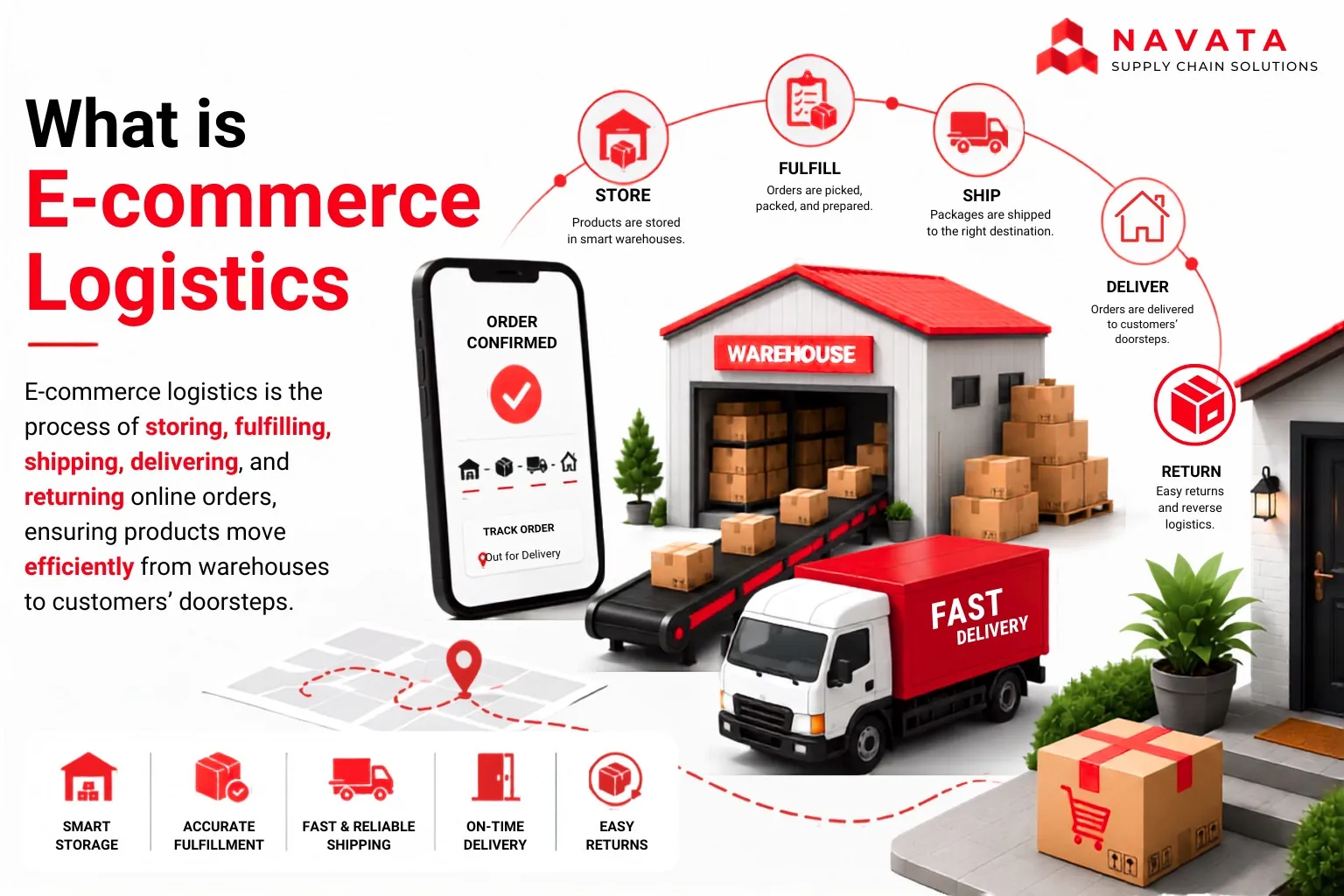
E-commerce logistics refers to the planning and management of activities involved in moving products from suppliers or warehouses to customers who purchase them online. It covers more than simply shipping a package. The process can include inventory management, warehousing, order processing, picking and packing, transportation, delivery, shipment tracking, and returns.
For example, when a customer orders a pair of shoes online, the product may be stored in a warehouse until the order is received. It is then picked, packed, labeled, handed to a carrier, transported through the delivery network, and delivered to the customer. If the customer returns the shoes, the process continues through reverse logistics, where the product is collected and returned to the appropriate facility for inspection and further processing.
In simple terms, e-commerce logistics is the system that manages how products are stored, fulfilled, delivered, and returned throughout an online order journey. It connects warehousing, fulfillment, transportation, and delivery to ensure products reach customers efficiently and reliably.
Process of E-Commerce Logistics
The e-commerce logistics process connects several stages to move a product from its source to the final customer.
Supplier → Warehouse → Customer Order → Order Fulfillment → Shipping → Delivery → Returns
1. Order Processing
The process begins when a customer places an order through an online store, marketplace, or another digital sales channel. The order details are recorded and the system checks product availability.
An order management system may then determine which fulfillment location should process the order based on factors such as inventory availability and the customer’s delivery address.
2. Warehousing and Inventory Management
After the order is assigned, the required product is located within the warehouse or fulfillment center. Accurate inventory records allow warehouse teams to identify the correct product and storage location.
For businesses operating across multiple locations, inventory visibility becomes increasingly important because stock may be distributed across several warehouses or fulfillment centers.
3. Order Fulfillment
The warehouse team picks the product from storage and prepares it for shipment. The item is checked, packed, and labeled with the necessary shipping information.
Once the package is ready, it is handed over to a carrier or transportation provider.
4. Shipping and Transportation
The package then moves through the appropriate transportation network. Depending on the distance and delivery model, this may involve several hubs or sorting facilities before the shipment reaches the destination area.
Shipment tracking allows the business and customer to follow the order as it moves through the network.
5. Last-Mile Delivery
After reaching the destination area, the package is transferred to the final delivery network. A delivery driver or carrier then transports it from the local facility to the customer’s address.
This is the final stage of forward e-commerce logistics.
6. Returns and Reverse Logistics
If the customer decides to return the product, the logistics process works in the opposite direction. The product is collected from the customer and transported to the seller, warehouse, or designated returns facility.
The returned product can then be inspected and processed according to the business’s return policy.
Key Components of E-commerce Logistics
- Logistics Infrastructure:- Warehouses, fulfillment centers, distribution centers, sorting hubs, and delivery facilities that physically support product movement.
- Technology & Software:- Order management systems, warehouse management systems, transportation management systems, inventory software, and tracking platforms.
- People & Operations:- Warehouse staff, pickers and packers, dispatch teams, drivers, customer service teams, and logistics managers.
- Transportation Network:- Carriers, delivery fleets, line-haul transportation, local delivery networks, and shipping partners.
- Inventory & Storage:- Stock allocation, storage locations, inventory visibility, replenishment, and inventory control.
- Packaging & Handling:- Packaging materials, labeling, product handling, sorting, consolidation, and shipment preparation.
- Data & Visibility:- Order data, inventory data, shipment tracking, delivery status, performance monitoring, and analytics.
- Returns Infrastructure:- Return collection, inspection, refurbishment, restocking, replacement, and disposal processes.
Types of E-commerce Logistics
1. In-House E-commerce Logistics
With in-house logistics, the business manages its own inventory, warehousing, order fulfillment, and shipping operations. This provides greater control over the customer experience but requires investment in facilities, employees, systems, and transportation.
2. Third-Party Logistics (3PL) for E-commerce
With a 3PL model, an external logistics provider manages some or all logistics activities on behalf of the e-commerce business. Services can include warehousing, inventory management, fulfillment, transportation, and returns.
3. Dropshipping Logistics
In dropshipping, the seller does not normally keep the products in its own inventory. Instead, the supplier stores the product and ships it directly to the customer when an order is received.
4. Hybrid E-commerce Logistics
A hybrid model combines different approaches. For example, an e-commerce business may operate its own warehouse for high-volume products while using a 3PL provider for other regions or specialized fulfillment requirements.
These models are commonly discussed in current e-commerce logistics guidance, including Amazon’s explanation of in-house, dropshipping, and 3PL approaches.
Benefits of E-commerce Logistics
Effective e-commerce logistics helps businesses manage inventory, fulfill orders accurately, and deliver products reliably. The benefits of e-commerce logistics include faster delivery, reduced operational inefficiencies, better shipment visibility, smoother returns, and improved customer satisfaction. These benefits help online businesses provide a consistent customer experience as order volumes grow.
1. Faster Delivery
Positioning inventory strategically and improving warehouse and transportation processes can reduce the distance and time required to deliver orders. Faster processing at the warehouse can also shorten the time between order placement and carrier pickup.
2. Lower Logistics Costs
Efficient inventory placement, packaging, transportation planning, and carrier management can reduce unnecessary handling and movement. Businesses can also reduce costs by consolidating shipments and improving delivery density.
3. Better Inventory Control
Accurate inventory information helps businesses understand what is available, where it is stored, and when stock needs replenishment. This reduces the risk of both stockouts and excess inventory.
4. Improved Customer Experience
Reliable delivery, accurate tracking, fewer damaged shipments, and simpler returns create a more predictable buying experience. Logistics therefore becomes part of the overall customer experience rather than simply an operational function.
5. Easier Business Scaling
A scalable logistics network allows an e-commerce business to handle increasing order volumes without rebuilding its entire operation every time demand increases.
6. Better Order Accuracy
Connected inventory, order, warehouse, and transportation systems can reduce manual errors and help ensure that the right product reaches the right customer.
7. More Efficient Returns
A structured reverse logistics process allows businesses to process returns systematically, recover inventory where possible, and reduce the time required to issue replacements or refunds.
8. Greater Supply Chain Visibility
Tracking systems and integrated logistics technology provide businesses with better visibility into inventory, orders, shipments, and delivery performance.
E-commerce Logistics vs Traditional Logistics
E-commerce logistics and traditional logistics share many basic activities, including warehousing, inventory management, transportation, and order fulfillment. The major difference is the way products are ordered, distributed, and delivered.
| Factor | E-commerce Logistics | Traditional Logistics |
|---|---|---|
| Typical order | Individual customer orders | Often bulk or consolidated orders |
| Main destination | Customer address | Retailer, distributor, or business |
| Delivery model | Often direct-to-consumer | Often business-to-business |
| Shipment volume | Many smaller shipments | Fewer larger shipments |
| Customer visibility | Real-time tracking is common | Visibility varies by operation |
| Returns | Important part of the process | Usually handled through different channels |
For example, a traditional supply chain may move a pallet of products from a manufacturer to a retailer. An e-commerce operation may instead pick individual products from a fulfillment center and ship separate packages directly to hundreds of customers.
This difference means e-commerce logistics requires processes designed for high order volumes, individual picking and packing, direct customer delivery, and frequent shipment updates.
Importance of E-commerce Logistics
The importance of e-commerce logistics lies in helping online businesses deliver products efficiently and reliably. An effective logistics process helps businesses maintain accurate inventory, process orders correctly, manage product movement, provide shipment visibility, and deliver orders within the promised timeframe. It also supports efficient returns when customers send products back.
For customers, logistics is a visible part of the online shopping experience. Delayed deliveries, incorrect orders, damaged packages, or poorly managed returns can negatively affect customer satisfaction.
For businesses, efficient logistics supports reliable order fulfillment and helps them scale operations as order volumes and customer locations increase.
Conclusion
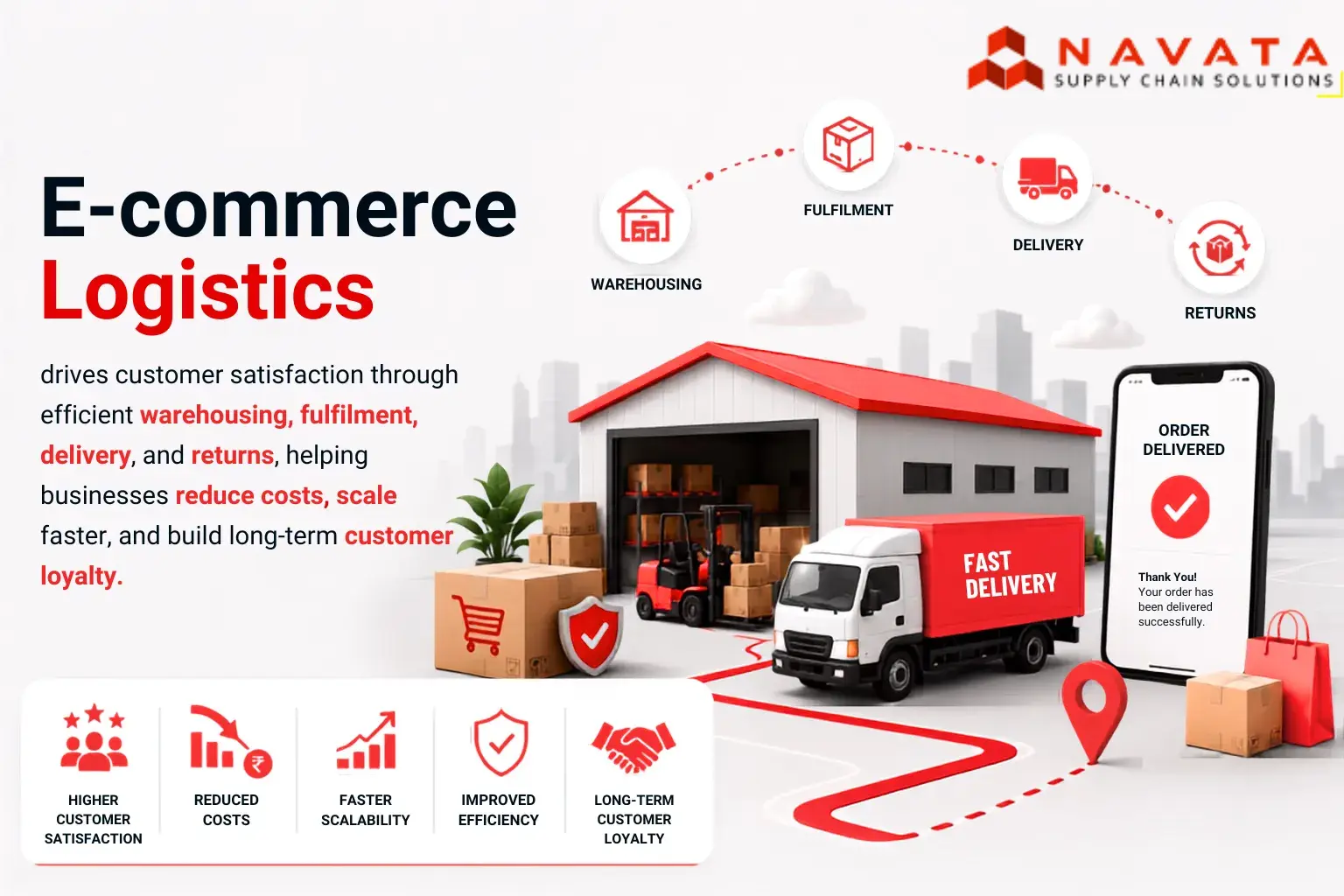
E-commerce logistics is the system that connects inventory, warehousing, order fulfillment, transportation, delivery, and returns in an online selling operation. From the moment products enter a warehouse to the moment an order reaches the customer’s doorstep—and potentially returns to the seller each stage forms part of the logistics process.
As e-commerce continues to grow, businesses need logistics operations that can manage individual orders efficiently while maintaining inventory accuracy, delivery visibility, and a reliable customer experience.
You May Also Like to Read: What Is a Fulfillment Center?