Most supply chain conversations about freight modes jump straight to trucks and trains. Water transportation rarely gets the same attention, yet it still moves roughly 80% of global trade by volume. If you’ve ever priced out shipping a container from one continent to another, you already know why nothing else comes close on cost per tonne. But water transport isn’t the right call for every shipment, and understanding both sides of that equation is what separates a smooth supply chain from a stressed one. This guide walks through the real pros and cons of water transportation, with the kind of detail a procurement manager or logistics planner actually needs before making a mode decision.
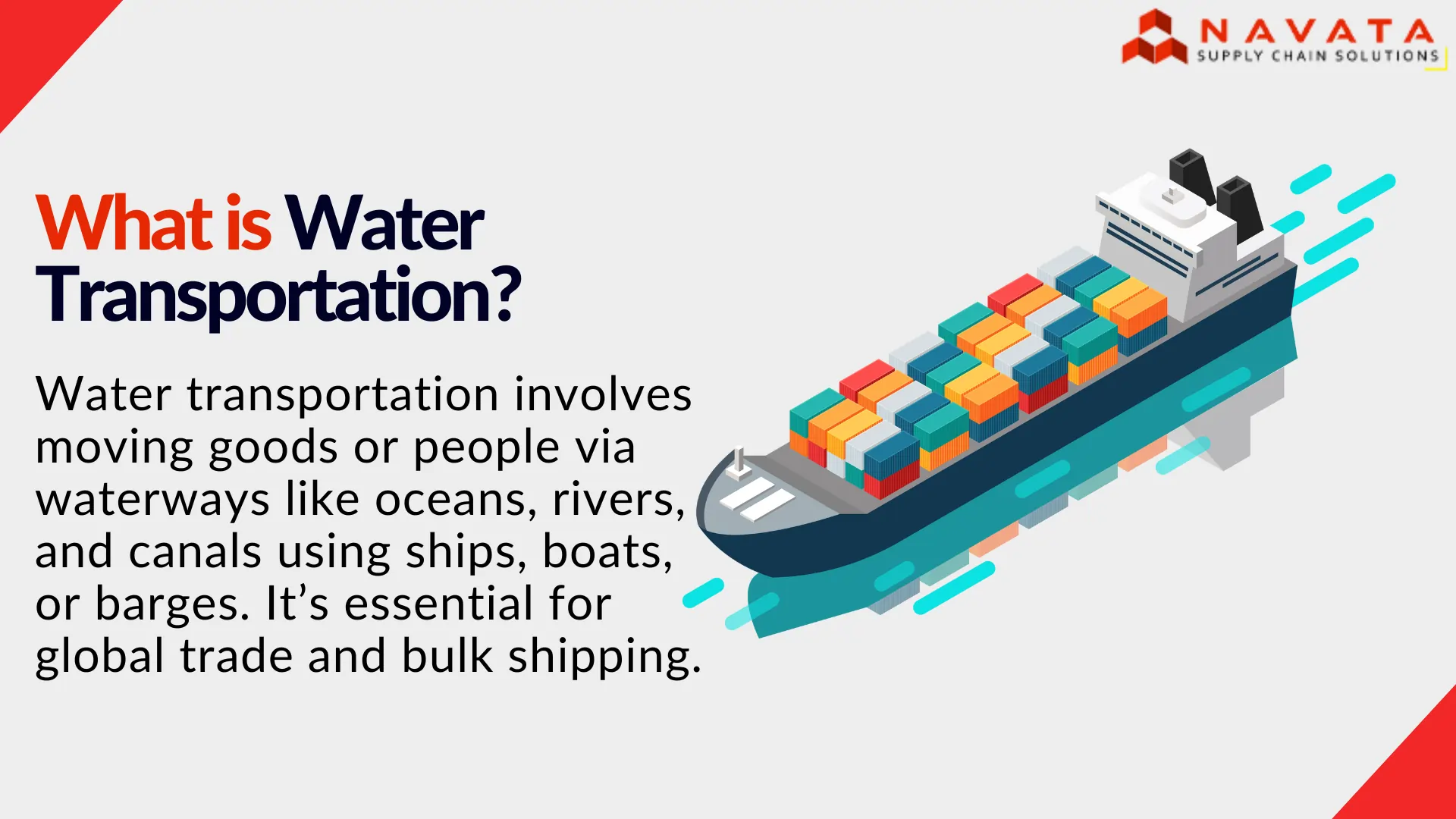
What Is Water Transportation?
Water transportation means moving cargo by ship, barge, or boat across rivers, canals, lakes, coastal waters, or the open ocean. It generally falls into three categories.
Inland waterway transport uses rivers and canals, such as barges moving grain or coal along a river system. Coastal shipping moves cargo between ports along a country’s coastline, often as a cheaper alternative to long-haul trucking. Ocean shipping is the big one: container ships and bulk carriers crossing international waters, carrying everything from electronics to crude oil.
Businesses lean on water transport because of one simple fact ships carry enormous volumes at a fraction of the per-unit cost of road or air. Industries like agriculture, mining, oil and gas, automotive manufacturing, and heavy machinery all depend on it, mainly because their cargo is bulky, heavy, or shipped in volumes that no truck fleet could handle economically.
You May Also Like to Read: Road Transportation Vs Water Transportation
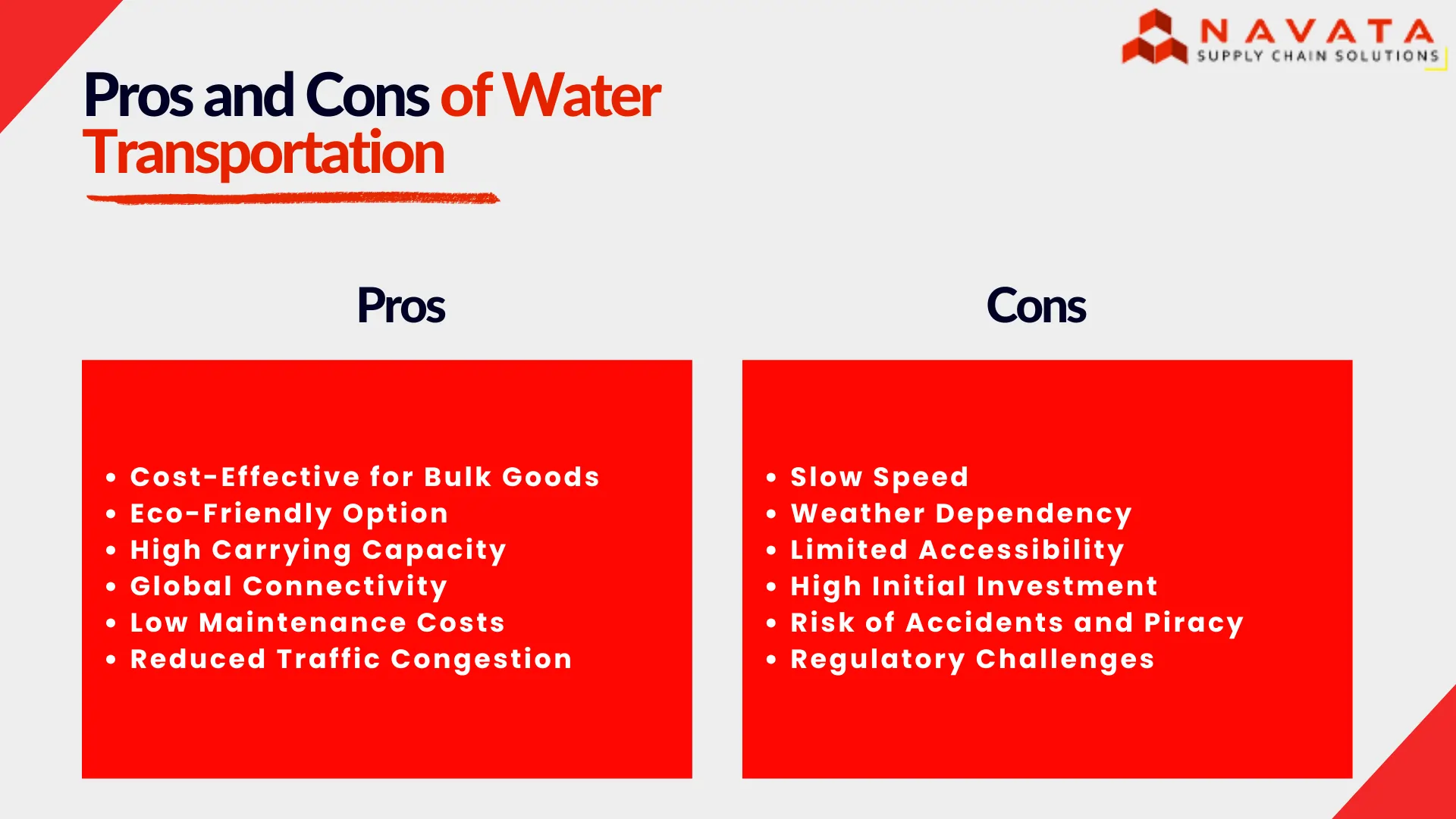
Pros of Water Transportation
When people list out the pros of water transportation, cost almost always tops the list — but it’s not the only reason ships still dominate global freight.
- Cost-effective for bulk cargo. A single bulk carrier can move tens of thousands of tonnes in one trip. Spread across that volume, the per-tonne cost drops well below road or rail, especially over long distances.
- High carrying capacity. There’s no real ceiling here. Whether it’s iron ore, grain, or thousands of containers, ships scale to volumes other modes simply cannot match.
- Fuel efficiency. Ships move more cargo per litre of fuel than trucks or planes. For a manufacturer shipping raw materials internationally, that efficiency compounds into meaningful savings.
- Built for international trade. Ocean freight is the backbone of cross-border commerce. If your supply chain touches more than one country, water transport is probably already part of it somewhere.
- Lower environmental impact per tonne-mile. Compared to air freight and even long-haul trucking, shipping produces less carbon per tonne moved — a factor that’s increasingly relevant for companies tracking Scope 3 emissions.
- Safe for heavy and oversized cargo. Wind turbine blades, industrial machinery, prefabricated structures — cargo that would need special permits and escort vehicles on the road often moves by sea without the same hassle.
- Strong fit for long-distance moves. The longer the route, the better water transport’s economics look relative to other modes.
Cons of Water Transportation
The flip side matters just as much. Every disadvantage of water transportation below has shown up as a real bottleneck in someone’s supply chain.
- Slow transit times. A container from Shanghai to a European port can take three to six weeks. If your business runs on tight replenishment cycles, that lead time has to be planned for well in advance.
- Weather dependency. Storms, monsoons, and rough seas cause delays that are genuinely outside anyone’s control. Inland waterways face their own version of low water levels during dry seasons, which can ground barge traffic entirely.
- Limited accessibility. Ships only go where there’s a port or navigable waterway. Cargo still needs trucks or rail to reach the final destination, which adds a transfer point and extra cost.
- Port congestion. Major ports periodically back up container ships that have spent weeks waiting offshore during peak season or after disruptions. That congestion ripples straight into delivery schedules.
- Heavy reliance on multimodal transport. Water transport rarely works alone. It needs road or rail on both ends, which means more handoffs, more documentation, and more places for something to go wrong.
- Customs delays. International shipments clear customs at every border they cross. Paperwork issues or inspections can hold cargo at port long after the ship has docked.
- Seasonal limitations. Some inland routes simply aren’t usable year-round, forcing shippers to plan around windows rather than on-demand schedules.
- Infrastructure constraints. Not every port can handle every ship size, and aging infrastructure in some regions limits throughput regardless of demand.
The Real Cost Benefit of Water Transport for Businesses
There’s a direct line from water transport to the bottom line, and it cuts both ways. Here’s the real cost-benefit picture.
On the upside, lower freight costs mean better margins, particularly for commodity-heavy industries. In agriculture, grain exporters depend on bulk carriers to move harvests at prices that keep them competitive globally. Mining companies move ore and coal in volumes only ships can handle economically. Oil and gas firms rely on tankers as the default mode for crude and refined products. The manufacturing and automotive sectors use container shipping to source components internationally and to export finished vehicles, often making it the single largest line item in their logistics budgets. For businesses managing multi-country supply chains, water transport also opens access to global sourcing and global markets that road or air alone can’t reach affordably. It’s frequently the mode that makes international trade financially viable in the first place.
The trade-off shows up in planning. The disadvantages of water transportation translate into specific operational headaches: long transit times mean inventory planning must account for weeks of lead time, tying up working capital and requiring more accurate demand forecasting. Delayed deliveries, whether from weather, congestion, or customs, can disrupt production schedules if there’s no buffer stock. Last-mile dependency adds a layer of coordination, since cargo still needs a reliable trucking or rail partner waiting at the port. Infrastructure risk is real, too: a port closure or capacity issue can stall an entire shipment with no quick alternative. And because water transport rarely stands alone, any disruption anywhere in that multimodal chain can cascade into the next leg.
When Should Businesses Choose Water Transportation?
Water transport makes the most sense for bulk cargo, international shipments, heavy or oversized equipment, and any non-urgent delivery where cost matters more than speed. If you’re moving raw materials across continents or shipping in volumes measured in thousands of tonnes, it’s usually the default choice.
Road transport wins for short-haul, time-sensitive deliveries with frequent stops. Rail fits well for large domestic volumes where a rail network already connects origin and destination. Air freight is the answer when speed outweighs cost pharmaceuticals, perishables, or anything with a tight delivery window.
You May Also Like to Read: Road Transportation vs Rail Transportation
Conclusion
Water transportation earns its place in global supply chains through sheer cost efficiency and capacity — there’s no cheaper way to move bulk cargo across long distances. But that advantage comes with real trade-offs: longer lead times, weather risk, and a dependency on ports and connecting transport that businesses need to plan around. The right call usually isn’t “water transport instead of everything else” — it’s knowing which leg of your supply chain it should own, and which legs are better handled by road, rail, or air.
Thanks For Reading: Pros and Cons of Water Transportation
Powered By 360Presence