

Table of Contents
Add a header to begin generating the table of contents
What Is Green Supply Chain Management?
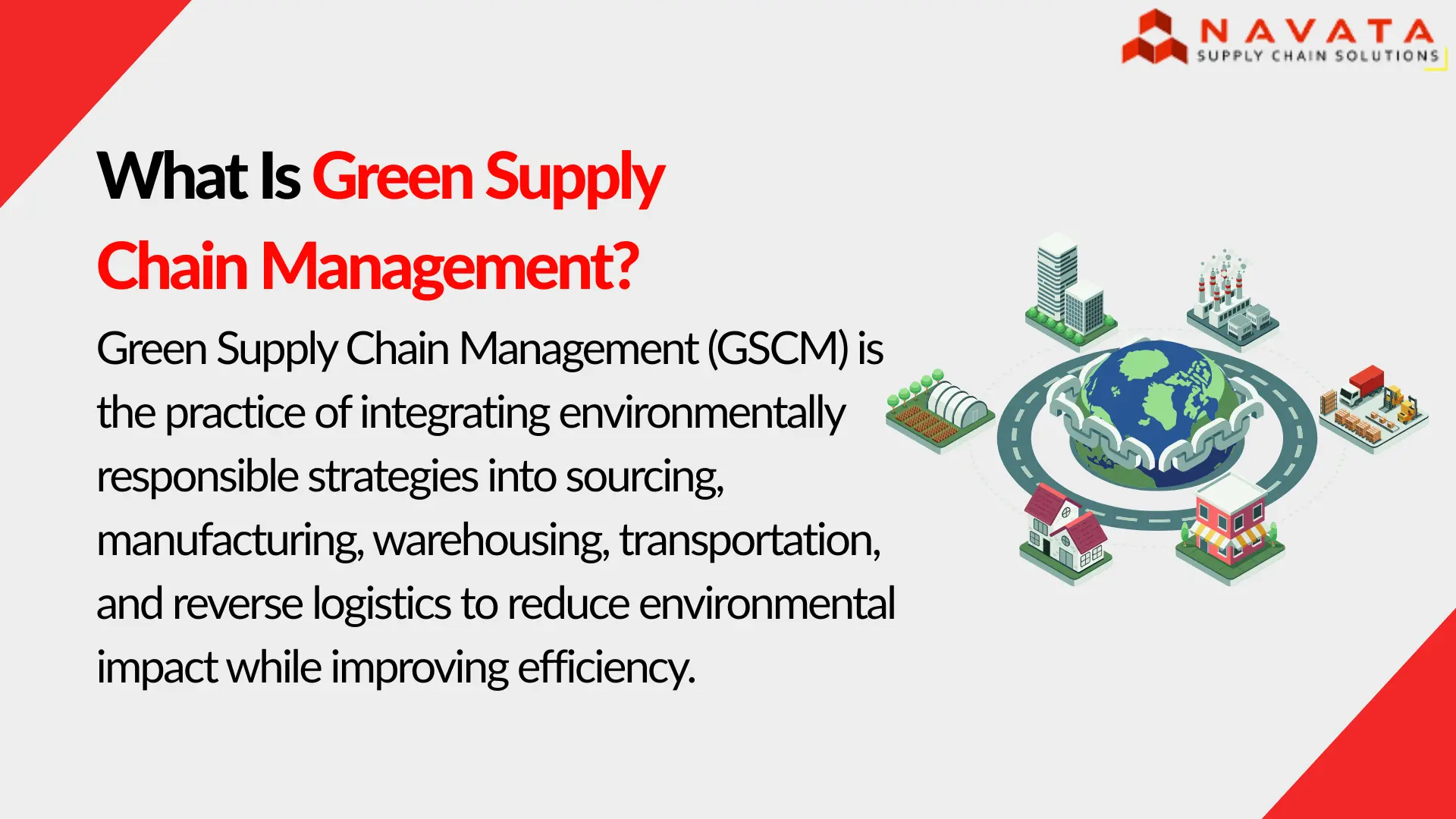
Green Supply Chain Management (GSCM) integrates environmental considerations into supply chain activities, including product design, sourcing, manufacturing, transportation, distribution, and end-of-life management.
In simple terms, GSCM means reducing the environmental impact of a supply chain while maintaining operational efficiency, cost, and service performance. It can involve sustainable supplier selection, efficient resource use, greener transportation, reduced packaging, energy-efficient warehousing, and reverse logistics.
GSCM also requires businesses to measure environmental performance and improve it continuously across the supply chain.
Objectives of Green Supply Chain Management
Although GSCM can vary by industry, its major objectives include:
- Reducing greenhouse gas emissions across supply chain activities.
- Minimizing waste from materials, packaging, production, warehousing, and distribution.
- Improving resource efficiency by using energy, water, materials, and transportation capacity more effectively.
- Encouraging sustainable procurement by incorporating environmental criteria into supplier selection.
- Improving operational efficiency through better planning and reduced unnecessary movement.
- Supporting regulatory and sustainability requirements through better environmental monitoring.
- Creating a more resilient supply chain that is less dependent on inefficient resource use.
The objective is therefore not simply to make a supply chain “green.” It is to integrate environmental performance into normal business and operational decisions.
How GSCM Works?
Green Supply Chain Management works by applying environmental considerations across the complete flow of goods and information. Instead of addressing sustainability only after products are manufactured, businesses consider environmental impact while designing products, selecting suppliers, planning inventory, operating warehouses, transporting goods, and managing returns.
A typical GSCM flow can be represented as:
Green Design → Green Procurement → Manufacturing → Green Warehousing → Green Transportation → Distribution → Reverse Logistics → Recycling/Recovery
1. Green Product and Packaging Design
Green design considers environmental impact before a product enters the supply chain. Businesses can reduce material consumption by designing products that are durable, repairable, reusable, recyclable, and efficient to transport. Packaging can also be made lighter, right-sized, reusable, or recyclable. Efficient packaging improves space utilization during storage and transportation, which can reduce material waste and the number of shipments required.
2. Green Procurement
Green procurement incorporates environmental criteria into supplier and material selection. Along with price, quality, and delivery performance, businesses can evaluate suppliers based on their environmental compliance, energy use, waste-management practices, packaging, emissions reporting, and use of recycled or renewable materials. This extends sustainability beyond the company’s own operations and encourages suppliers to adopt responsible practices throughout the upstream supply chain. Green sourcing is recognized as a core component of GSCM.
3. Green Manufacturing
Green manufacturing focuses on producing goods while using fewer resources and generating less environmental impact. Manufacturers can improve performance by reducing energy and water consumption, material waste, scrap, rework, and harmful emissions. Process optimization, efficient equipment, renewable energy, waste recovery, and better resource management can help achieve these goals. The emphasis is on improving production efficiency while reducing the environmental footprint of manufacturing.
4. Green Warehousing
Green warehousing applies sustainability principles to storage, material handling, energy use, and inventory operations. Warehouses can reduce their environmental impact through energy-efficient lighting and equipment, renewable energy, energy monitoring, efficient layouts, better space utilization, and accurate inventory management. Reducing unnecessary movement and handling can also lower energy consumption and operational waste. The objective is not simply to add automation, but to use appropriate processes and technology to improve resource efficiency without compromising warehouse performance.
5. Green Transportation
Green transportation focuses on moving goods with less fuel consumption, emissions, and unnecessary vehicle movement. Businesses can improve transportation efficiency through route optimization, shipment consolidation, better vehicle-load utilization, reduced empty kilometers, preventive fleet maintenance, and suitable lower-emission transportation options. These measures can reduce the environmental impact of freight movement while also improving transportation efficiency. Green logistics is a core component of GSCM because transportation decisions directly influence fuel consumption and emissions.
6. Green Distribution
Green distribution focuses on reducing the environmental impact of delivering finished products to customers and downstream locations. Businesses can achieve this through efficient delivery planning, optimized last-mile routes, shipment consolidation, better vehicle utilization, appropriate packaging, and strategically located distribution centers. Improving delivery density and reducing unnecessary trips can help lower transportation requirements while maintaining customer service levels.
7. Reverse Logistics
Reverse logistics manages the movement of returned products, packaging, components, and materials back through the supply chain for recovery or further use. Instead of sending these materials directly to disposal, businesses can repair, refurbish, reuse, resell, recycle, or recover them where appropriate. This helps reduce waste and creates a more circular flow of materials. Reverse logistics is therefore an important part of GSCM because it extends environmental considerations beyond forward distribution and product delivery.
Importance of GSCM
Green Supply Chain Management is important because environmental impacts can occur throughout the supply chain, from raw-material extraction and supplier operations to transportation, warehousing, product use, and end-of-life management.
For businesses, the importance of GSCM extends beyond environmental protection.
- Reducing Environmental Impact:- GSCM helps organizations identify and reduce unnecessary emissions, waste, energy use, and material consumption.
- Improving Resource Efficiency:- Efficient use of fuel, electricity, warehouse space, packaging materials, and transportation capacity can reduce both environmental impact and operational waste.
- Responding to Regulatory Pressure:- Environmental reporting and sustainability requirements are becoming increasingly important across markets. Better supply chain data helps businesses understand and report their environmental performance.
- Building Supply Chain Resilience:- Resource shortages, energy-price volatility, climate-related disruptions, and changing regulations can affect supply chain continuity. Improving resource efficiency and diversifying operational approaches can strengthen resilience.
- Meeting Customer and Stakeholder Expectations:- Customers, investors, procurement teams, and business partners increasingly evaluate environmental performance when assessing companies and suppliers.
- Improving Visibility:- GSCM requires organizations to understand where resources are being consumed and where emissions and waste are generated. This encourages better supply chain data and operational visibility.
Research also links stronger GSCM practices with improved Scope 3 carbon disclosure and lower Scope 3 carbon footprints, particularly through stronger supplier relationships and environmental innovation.
Benefits of GSCM
Green Supply Chain Management can create environmental, operational, financial, and strategic benefits when sustainability initiatives are integrated into daily supply chain operations.
- Lower Transportation Costs:- Route optimization, load consolidation, improved vehicle utilization, and reduced empty mileage can reduce unnecessary fuel consumption and transportation activity.
- Reduced Waste:- Better inventory management, packaging optimization, recycling, reuse, and process improvements can reduce the amount of material sent to disposal.
- Improved Energy Efficiency:- Energy monitoring and efficient equipment can help warehouses and manufacturing facilities identify high-consumption activities and reduce unnecessary energy use.
- Better Resource Utilization:- GSCM encourages businesses to use materials, warehouse capacity, transportation capacity, and energy more efficiently.
- Improved Compliance Readiness:- Accurate environmental data can make it easier to monitor sustainability requirements and prepare for audits or reporting obligations.
- Stronger Supply Chain Resilience:- Efficient operations and reduced dependency on wasteful processes can help businesses respond more effectively to resource constraints, changing regulations, and market disruptions.
- Improved Brand Reputation:- A credible sustainability strategy can strengthen relationships with customers, employees, investors, suppliers, and other stakeholders.
- Greater Innovation:- Green supply chain initiatives can encourage businesses to adopt new technologies, packaging designs, transportation models, energy systems, and circular processes.
- Better Supplier Collaboration:- Environmental targets encourage businesses to work more closely with suppliers and logistics partners on packaging, emissions, materials, and resource efficiency.
- Long-Term Cost Efficiency:- Not every green initiative produces immediate savings. However, improvements that reduce energy consumption, material waste, unnecessary transportation, and inefficient handling can create long-term operational value.
Green Supply Chain Management Best Practices
Effective GSCM requires sustainability to become part of everyday operational decisions. Competitor research consistently highlights sustainable sourcing, energy efficiency, technology, supplier collaboration, green logistics, waste reduction, and measurable targets as core practices.
1. Set Measurable Sustainability Goals
Businesses should begin with clear and measurable sustainability targets instead of broad goals such as “be more sustainable.” Targets can include reducing CO₂ emissions per shipment, lowering fuel or warehouse energy consumption, increasing recycling rates, reducing packaging material, or improving vehicle utilization. Measurable targets provide a baseline against which businesses can track progress and identify areas that need improvement. Current GSCM guidance also emphasizes long-term sustainability goals and continuous monitoring as important parts of implementation.
2. Adopt Sustainable Procurement
Sustainable procurement means considering environmental performance when selecting suppliers, materials, and products alongside traditional criteria such as cost, quality, reliability, and delivery performance. Companies can evaluate suppliers based on environmental compliance, energy and resource use, waste management, packaging practices, emissions reporting, recycled-material use, and relevant certifications. Supplier collaboration is particularly important because environmental impacts can occur beyond a company’s direct operations.
3. Optimize Transportation
Transportation is a major area for improving supply chain environmental performance. Businesses can reduce unnecessary fuel consumption and emissions through route optimization, shipment consolidation, load maximization, vehicle tracking, and better delivery planning. Where suitable for the route and operating requirements, companies can also evaluate electric vehicles and other lower-emission transportation options. Best-in-class logistics operations have specifically used load maximization and vehicle tracking to improve delivery efficiency and reduce environmental impact.
4. Improve Warehouse Energy Efficiency
Warehouses can reduce their environmental footprint by improving how they use electricity, equipment, space, and other resources. Practical measures include energy-efficient lighting, solar power, efficient material-handling equipment, temperature controls, energy monitoring, and better facility layouts. Businesses can also track energy consumption against operational output, such as energy used per pallet handled, to identify inefficient areas and measure improvements. Sustainable warehouse research likewise emphasizes the importance of measurable indicators for evaluating warehouse sustainability.
5. Reduce Packaging Waste
Packaging should protect products without using unnecessary material. Right-sized cartons, recyclable or reusable packaging, standardized packaging formats, and better pallet configuration can reduce material consumption while improving transportation efficiency. Less packaging can also mean lower shipment weight and better use of available vehicle and warehouse capacity. Green distribution research considers packaging and vehicle loading together because both influence the environmental efficiency of moving goods.
6.Improve Inventory Accuracy
Accurate inventory management supports GSCM by reducing unnecessary movement, duplicate handling, product damage, emergency shipments, and avoidable waste. Technologies such as barcodes, RFID, and warehouse management systems can provide better visibility into inventory locations and movement. When integrated properly with warehouse processes, this visibility can help businesses make better decisions about replenishment, storage, order fulfillment, and transportation.
7. Strengthen Reverse Logistics
Businesses should establish clear processes for managing returned products, reusable packaging, damaged goods, components, and recoverable materials. Depending on their condition, these items can be repaired, refurbished, reused, resold, recycled, or recovered rather than immediately discarded. Reverse logistics therefore helps extend product and material value while supporting waste reduction and circular supply-chain practices. Research identifies reverse logistics and product recovery as important components of sustainable supply chains.
8. Use Data and Technology
Technology helps businesses identify where environmental and operational inefficiencies occur. Warehouse Management Systems (WMS), Transportation Management Systems (TMS), IoT sensors, RFID, GPS tracking, route-optimization platforms, AI and analytics, energy-monitoring systems, and carbon-accounting tools can improve visibility across supply chain operations.
The objective is not to adopt technology simply because it is available. Technology should be selected when it can produce useful data, improve planning, reduce unnecessary movement, increase resource utilization, or support measurable environmental improvements. GSCM research identifies information systems and technology as important enablers of implementation and monitoring.
9. Collaborate With Supply Chain Partners
A company’s environmental performance depends partly on suppliers, carriers, warehouse operators, distributors, and other supply chain partners. Businesses should therefore establish common sustainability expectations and encourage partners to provide relevant environmental data.
Supplier scorecards can include criteria such as emissions, energy use, waste management, packaging, environmental compliance, and sustainability certifications. Joint process improvement and supply-chain sustainability scorecards are also used by best-in-class logistics organizations to align partners with environmental objectives.
10. Review and Improve Performance Regularly
GSCM should be managed as a continuous improvement process rather than a one-time sustainability project. Companies should regularly review environmental indicators alongside operational measures such as cost, service levels, order cycle time, inventory accuracy, vehicle utilization, and warehouse utilization.
Useful GSCM indicators include emissions intensity, energy consumption per handling unit, packaging material per order, waste-diversion rate, recycling rate, and supply-chain waste generation. Reviewing these measures together helps businesses determine whether sustainability initiatives are actually improving both environmental and operational performance.
Challenges in GSCM
Implementing GSCM can create significant value, but organizations may face operational, financial, technological, and organizational challenges.
1. Higher Initial Investment
Energy-efficient equipment, renewable-energy systems, electric vehicles, monitoring technologies, and sustainable packaging may require upfront investment.
The business case should therefore consider both initial costs and longer-term operating savings.
2. Limited Supplier Visibility
Businesses may have limited information about environmental performance beyond their immediate suppliers.
This makes supplier data collection and collaboration important.
3. Difficulty Measuring Scope 3 Emissions
Supply-chain emissions can occur across suppliers, carriers, distributors, and other external activities. Collecting consistent and verifiable data across these relationships can be difficult.
Recent research specifically identifies Scope 3 accountability and supply-chain information exchange as important challenges and areas of GSCM development.
4. Technology and Data Gaps
Environmental measurement requires reliable operational data. Inconsistent data from transportation, warehouses, suppliers, or inventory systems can make accurate measurement difficult.
5. Resistance to Operational Change
Employees and partners may be accustomed to existing processes. New sustainability requirements may require changes to procurement, transportation, warehouse, and reporting workflows.
6. Balancing Sustainability With Service Requirements
A greener option is not automatically the best operational option.
For example, a transportation decision must balance:
- Emissions
- Cost
- Delivery time
- Capacity
- Customer requirements
- Product characteristics
The objective should be to optimize the overall supply chain rather than maximize one sustainability metric at the expense of service performance.
7. Risk of Greenwashing
Businesses should avoid making broad sustainability claims without measurable evidence.
Clear targets, reliable data, transparent reporting, and independently recognized standards can make sustainability claims more credible. ClearTax also identifies greenwashing as a potential risk when sustainability initiatives are superficial.

Conclusion
Green supply chain management isn’t a trend that fades once the current wave of climate policy settles down. It reflects a permanent shift in how customers, regulators and investors expect goods to move through the world. The companies getting ahead of it aren’t necessarily the biggest or best-funded ones. They’re the ones willing to start, whether that means optimizing one delivery route, switching to recyclable packaging, or asking suppliers a few pointed questions before the next contract renewal. The tools needed to measure and reduce supply chain emissions are far more accessible now than they were even five years ago. What used to require a dedicated sustainability department can now start with a spreadsheet, a few honest questions about where the waste is, and a willingness to change how decisions get made, one stage at a time.
FAQs
How do companies measure supply chain carbon footprint?
Businesses typically measure transportation fuel usage, warehouse energy consumption and other operational emissions. These are converted into CO₂ equivalent (CO₂e) using standard emission factors and carbon accounting tools.
Is green logistics more expensive than traditional logistics?
Although some sustainability initiatives require initial investment, many practices such as route optimization, packaging reduction and energy efficiency lower operating costs. Most businesses recover their investment through fuel and waste savings over time.
How can a warehouse become more sustainable?
A warehouse can become more sustainable by using LED lighting, better insulation, renewable energy, efficient inventory planning, automated systems and recycling programs to reduce waste and energy consumption.
What is the difference between green logistics and sustainable supply chain management?
Green logistics mainly focuses on reducing the environmental impact of transportation and warehousing. Sustainable supply chain management covers a wider scope by including environmental, social and ethical practices across the entire supply chain.
What role does technology play in green supply chain management?
Technologies such as Artificial Intelligence (AI), Internet of Things (IoT), warehouse management systems and data analytics help businesses monitor emissions, improve resource utilization and make informed sustainability decisions.
Do small and mid-sized businesses need a formal GSCM program?
No. Small and medium-sized businesses can begin with simple initiatives such as optimizing delivery routes, reducing packaging waste or choosing sustainable suppliers before gradually developing a comprehensive green supply chain strategy.