
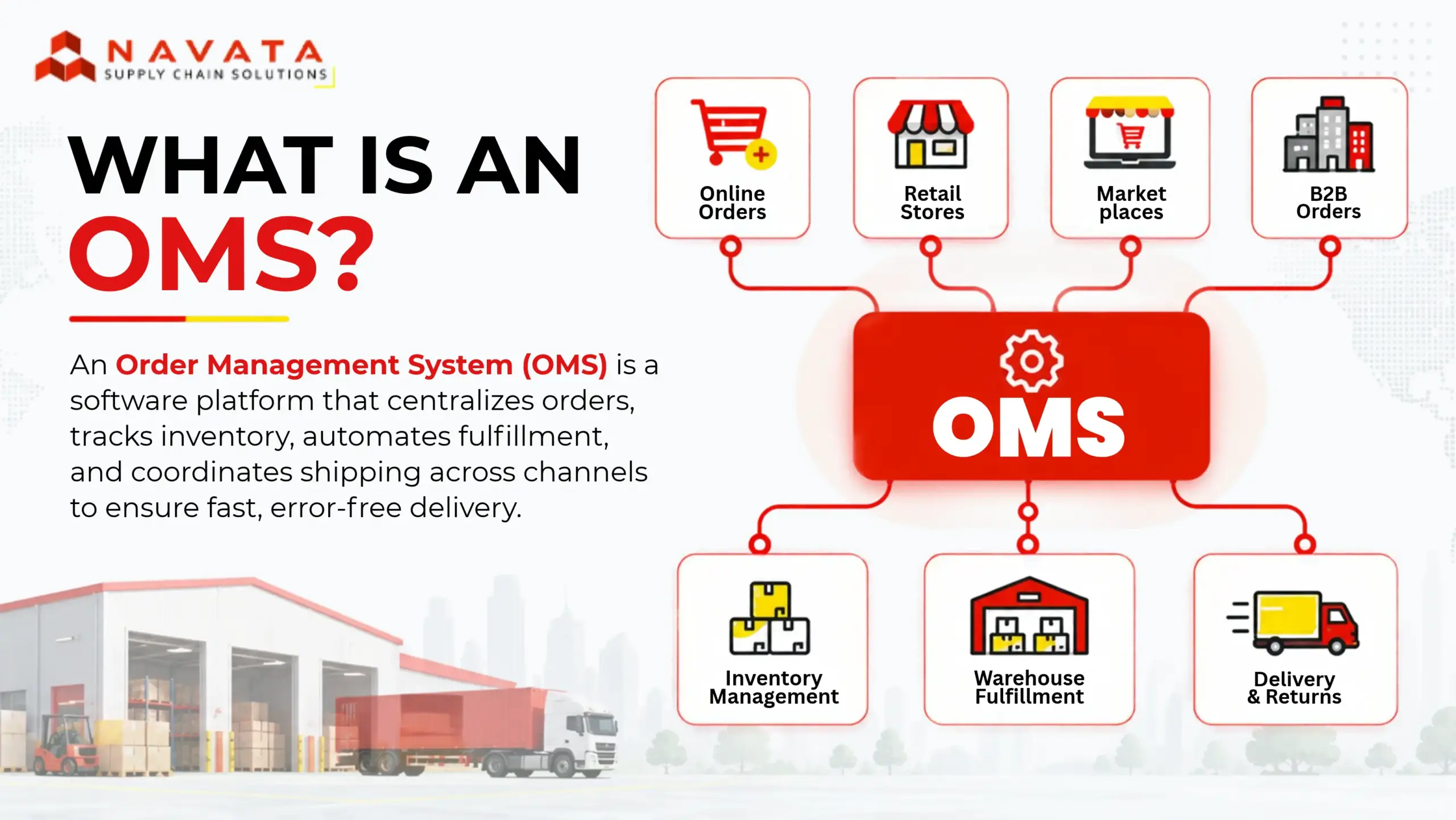
An OMS, or order management system, is a centralized software platform that manages the end-to-end order lifecycle across multiple sales channels, from the moment an order is placed to fulfillment, returns, and everything a business needs to track in between. As an OMS platform, it acts as the unified source for orders, inventory, payments, fulfillment, and customer communications, which matters most for brands operating across e-commerce sites, marketplaces, and quick-commerce channels at the same time. This article explains what an OMS does, how it works, the benefits of using OMS, how it compares to a WMS and an ERP, and how it supports omnichannel order management for businesses selling across multiple channels.
What Is an OMS?
An OMS is a centralized software platform that manages the end-to-end order lifecycle across multiple sales channels. It serves as the unified source for orders, inventory, payments, fulfillment, returns, and customer communications, which is particularly important for brands operating across diverse sales platforms including e-commerce sites, marketplaces, and quick-commerce channels.
You May Also Like to Read: E-commerce Inventory Management: Challenges, Control & Solutions
Why OMS Matters Today
Scattered order processing across spreadsheets and disconnected systems leads to inventory inaccuracies, overselling, cancellations, and poor customer communication. An OMS platform solves this through centralization, automation, and intelligence applied to every order, regardless of which channel it came from.
How an OMS Works (The Full Lifecycle)
Order Capture Across Channels. Orders integrate from Shopify, WooCommerce, Amazon, Flipkart, Meesho, retail POS systems, and B2B portals, standardized within one dashboard.
Real-Time Inventory Accuracy. Synchronization across warehouses, dark stores, fulfillment centers, and in-transit stock substantially reduces stockouts and overselling.
Intelligent Order Routing and Allocation. The system selects the optimal fulfillment point based on proximity, availability, service-level requirements, and cost.
Automated Fulfillment Workflows. Triggers picking, packing, quality checks, label generation, and dispatch automatically.
Real-Time Shipment Tracking. Customers receive live updates at each fulfillment stage.
Returns and RTO Management. Handles reverse pickups, refunds, and return-to-stock workflows.
Key Features of an OMS Platform
An OMS platform typically includes:
Centralized Order Processing. Consolidates orders from all channels into a single dashboard, reducing silos and improving visibility across channels.
Real-Time Multi-Location Inventory. Reduces the risk of overselling through dynamic accuracy across all locations and in-transit stock.
Smart Order Routing. Automatically selects the most efficient fulfillment point considering stock, location, cost, and service-level factors.
Automated Shipping and Carrier Selection. Evaluates multiple couriers and selects the best-fit carrier based on serviceability and delivery timelines.
Multi-Channel Integration. Connects with e-commerce platforms, marketplaces, POS systems, ERPs, and WMS tools.
Reverse Logistics and RTO Control. Streamlines returns through automated pickups and flags high-risk orders using customer insights.
Optimize Your Supply Chain with Experts!
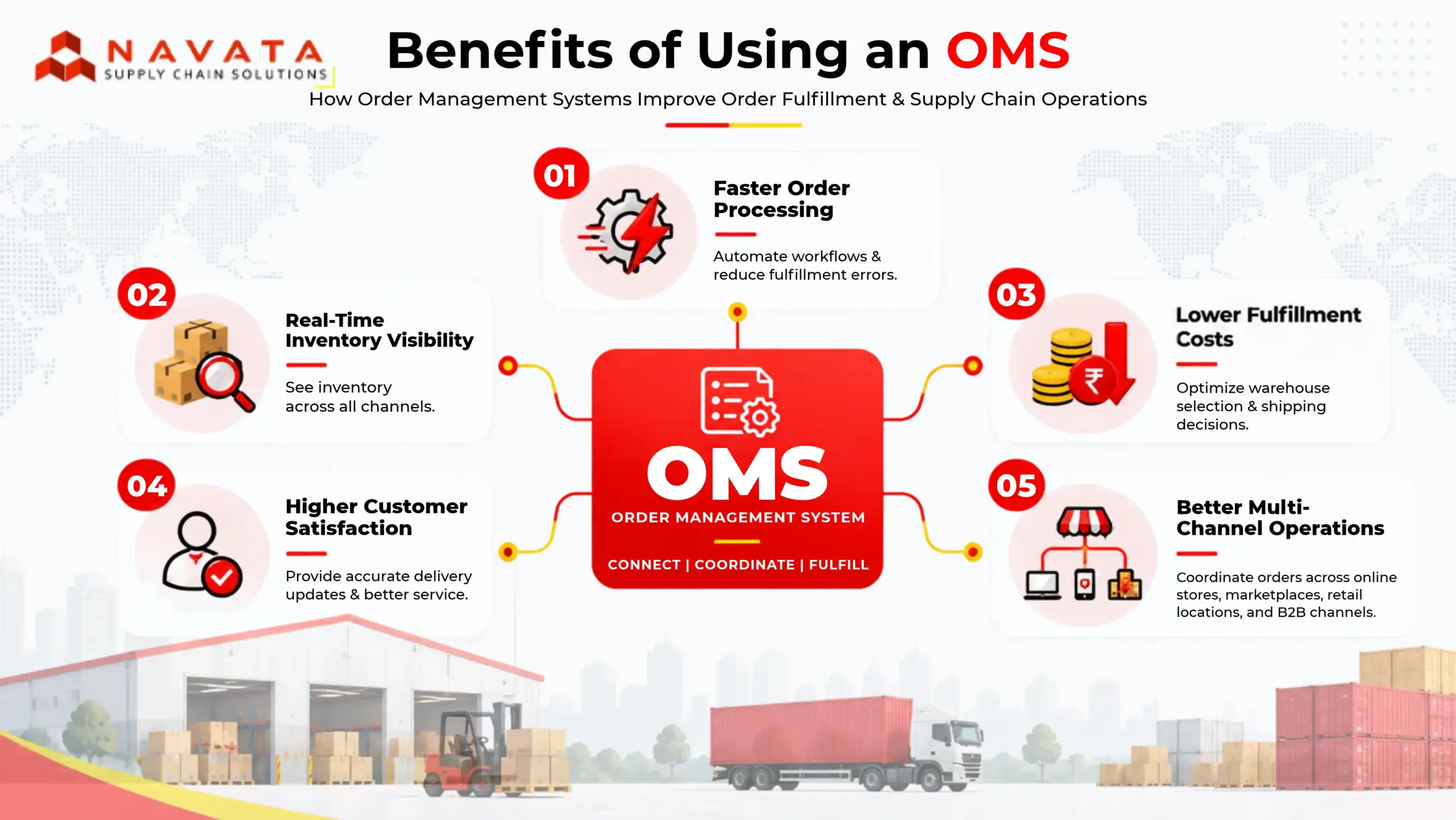
Benefits of Using OMS
Faster Order Processing. Automation reduces manual steps and lowers fulfillment errors.
Lower Logistics and Fulfillment Costs. Intelligent warehouse selection and carrier allocation minimize shipping distances and reduce the risk of mis-shipments.
Real-Time Inventory Visibility. A single source of truth across all channels supports better forecasting and replenishment decisions.
Higher Customer Satisfaction. Accurate delivery estimates and proactive tracking reduce “where is my order” inquiries and support repeat purchases.
Improved Multi-Channel Profitability. Unified operations reduce channel conflicts and support revenue growth across platforms.
You May Also Like to Read: Top 7 Challenges in Supply Chain Operations & Solutions
Who Needs an OMS?
Brands experiencing stock discrepancies, high order volumes, multi-warehouse operations, rising cancellations, slow delivery, or a lack of operational visibility should treat an OMS as a priority. This applies particularly to e-commerce, retail, quick-commerce, B2B, and D2C brands managing more than one sales channel.
OMS vs WMS vs ERP (Quick Clarification)
It helps to be precise about how these three systems differ, because they are often confused with each other:
- OMS: Manages orders, routing, inventory visibility across channels, and customer notifications
- WMS: Manages storage, picking, packing, and warehouse floor workflows
- ERP: Manages accounting, finance, procurement, and HR
An OMS is the operational layer that connects everything: it does not replace a warehouse management system; it coordinates with one. A WMS executes what happens physically inside a warehouse, while an OMS decides which warehouse or fulfillment point should handle a given order in the first place and keeps the customer informed once it does. Businesses evaluating both systems together, rather than in isolation, typically get better fulfillment outcomes than optimizing either one alone. For a closer look at warehouse-side execution, see Navata Supply Chain Solutions’ warehouse management system capabilities.
Omnichannel Order Management
Omnichannel order management is where an OMS delivers some of its most visible value, because it is what makes advanced fulfillment models possible in the first place: ship-from-store, click-and-collect, dark-store fulfillment, in-store pickup, and endless-aisle inventory access. These capabilities matter most in fashion, FMCG, beauty, electronics, and grocery, where customers expect to buy, return, or collect an order through whichever channel is most convenient at that moment, and expect the business to know the true state of that order regardless of which channel they use.
Conclusion
An order management system is no longer optional for a business selling across more than one channel. It is the operational layer that keeps orders, inventory, and customer communication consistent regardless of where a sale originates, and it is what makes omnichannel order management, faster fulfillment, and fewer stockouts possible at scale.
Thanks For Reading: What Is an OMS (Order Management System)?
Curious How Order Management Connects to Warehouse Execution?
See how Navata Supply Chain Solutions supports the warehouse-side systems an OMS coordinates with.
Explore Our Warehouse Management Solutions