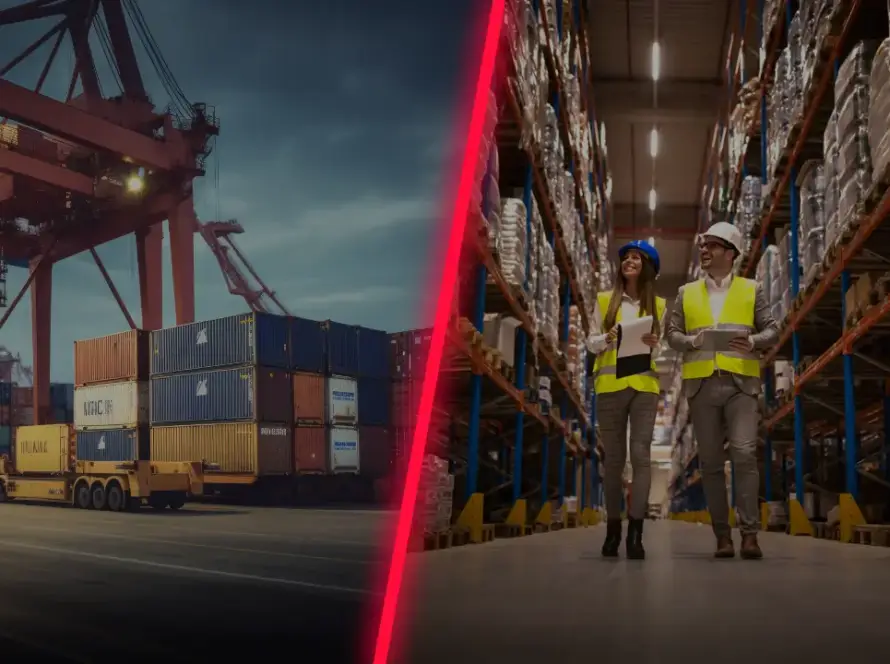
Benefits of Agentic AI in Logistics and Supply Chain
Agentic AI is becoming the most transformative technology in modern logistics. Unlike traditional rule-based automation, Agentic AI uses autonomous agents that perceive, decide, act, and self-correct across the supply chain — in real time.
The result is a supply chain that operates with sharper intelligence, higher adaptability, and near-zero manual intervention.
Below is breakdown of the core benefits of Agentic AI in logistics and supply chain is rapidly becoming the new operating system for logistics.
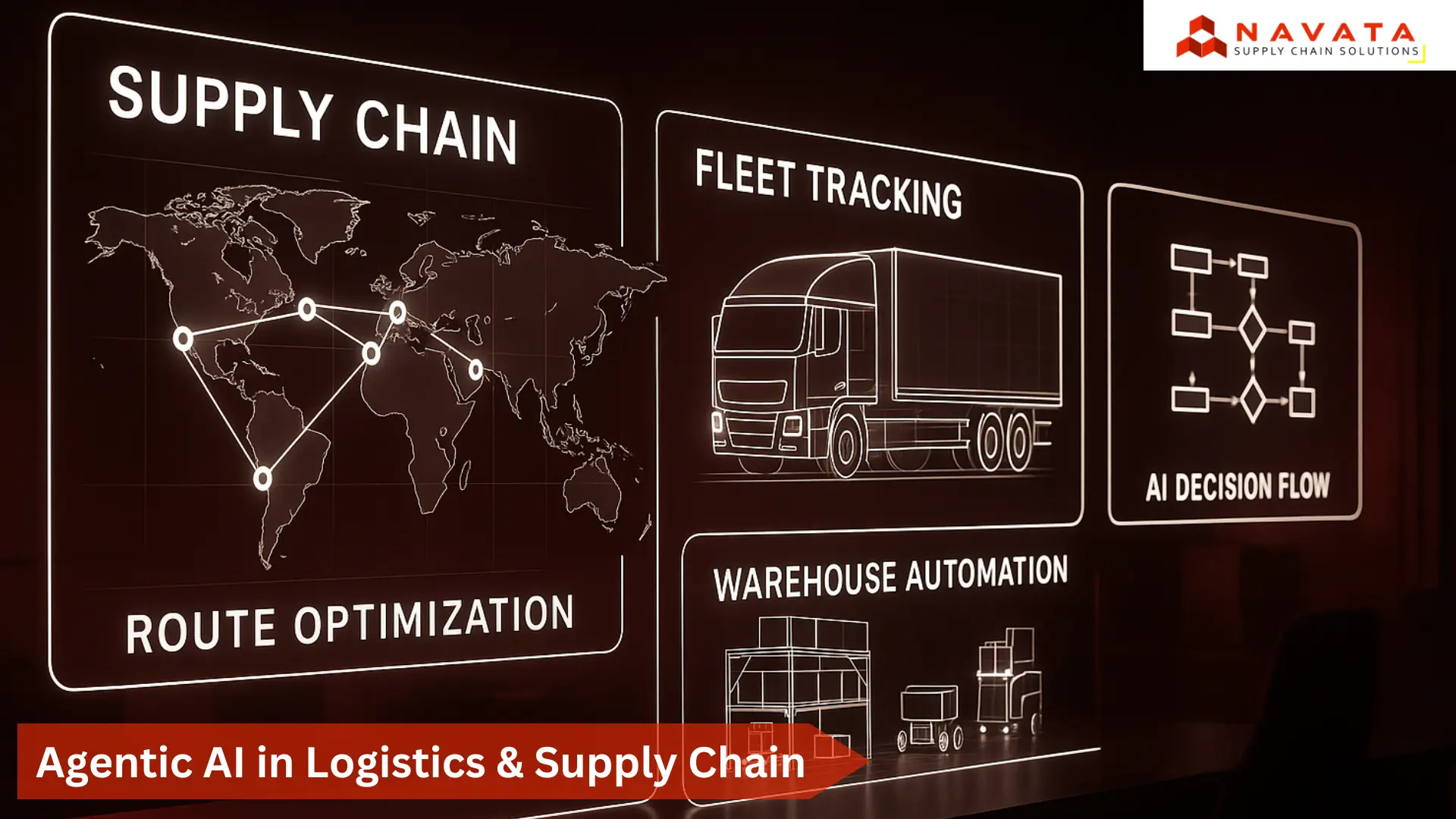
You May AlsoLike to Read: Role of Artificial Intelligence and Machine Learning in Supply Chain
1. Higher Operational Efficiency
Traditional operations rely on manual coordination — dispatchers plan routes, supervisors allocate warehouse tasks, and planners adjust loads. Agentic AI eliminates this friction.
How it works:
Agents continuously interpret live data: demand patterns, traffic, SKU velocity, dock availability.
They autonomously trigger actions: reslot SKUs, batch pick tasks, resequence routes, rebalance labor.
They monitor outcomes and self-correct if inefficiencies emerge.
Impact:
Higher throughput per shift
Lower idle time for manpower, vehicles, and MHE
A unified, synchronized flow of goods across warehouse and transport
Faster operational tempo with fewer handovers
In short, operations “run themselves,” unlocking a leaner network without increasing headcount.
2. Lower Logistics and Transportation Costs
Agentic AI cuts costs at every operational layer:
Fleet & Routing Costs
Dynamic rerouting reduces fuel burn and avoids congestion.
Better load consolidation lowers empty miles.
Driver assignments auto-optimize for cost per drop.
Warehouse Costs
Slotting engines reduce walking distance and picking time.
Automated task orchestration minimizes overtime and rework.
Network Costs
Predictive demand signals reduce unnecessary inter-warehouse transfers.
Smart replenishment avoids excess safety stock.
Result:
A measurable reduction in—
Fuel expenses
Vehicle downtime
Labor inefficiencies
Inventory holding costs
Margins rise without compromising service commitments.
3. Faster, More Reliable & Predictable Deliveries
Customers want fast, consistent, transparent deliveries—and Agentic AI makes this possible.
What Agentic AI does:
Reacts instantly to real-time disruptions: traffic spikes, order surges, shortages.
Reschedules deliveries and reassigns drivers autonomously.
Optimizes stop sequences on the fly.
Continuously recalibrates ETAs based on live movement.
This eliminates uncertainty and improves delivery precision across first-mile, mid-mile, and last-mile logistics.
Outcome:
Higher SLA adherence
Reduced failed deliveries
Accurate ETAs and fewer delays
Speed that feels “Amazon-level” even for mid-sized logistics networks
4. Better Customer Experience Across the Entire Journey
Agentic AI enhances both operational and customer-facing touchpoints.
Examples:
Accurate ETAs powered by real-time recalculation
Proactive notifications when delays are predicted
Instant issue resolution (auto-reroute, alternate SKU, nearest hub redirect)
AI chatbots offering contextual support tied to operational data
This reduces customer anxiety, improves transparency, and builds stronger trust in the brand.
Over time, this translates to:
Higher repeat order rate
Lower support volume
Better post-purchase satisfaction
5. Seamless, Software-Driven Scalability
As order volume grows, traditional planning teams become bottlenecks. Agentic AI breaks this limitation.
How:
Agents dynamically reassign workloads across warehouse zones.
Fleet capacity adjusts autonomously with real-time demand.
Systems manage spikes (sales, seasonal peaks, campaigns) without additional manpower.
Whether it’s 500 orders or 50,000 in a day, the network scales effortlessly because the intelligence is decentralized — not dependent on human planners.
Perfect for fast-growing:
eCommerce brands
Retail networks
6. Increased Resilience Through Predictive Risk Management
Supply chains are vulnerable to volatility — weather, geopolitical issues, supplier delays, capacity shortages. Agentic AI strengthens resilience through predictive, autonomous response.
Agents:
Identify early signs of disruption
Suggest alternatives (supplier, lane, hub, carrier)
Trigger preemptive adjustments
Maintain service continuity without manual firefighting
Examples:
Predicting a port slowdown and reassigning inbound freight
Forecasting stockouts and pulling inventory from a nearby hub
Pre-planning alternative last-mile capacity during spikes
This shifts logistics from reactive to strongly preemptive — reducing service failures and costly breakdowns.
7. End-to-End Visibility With Contextual, Action-Oriented Insights
Traditional visibility answers: Where is my shipment?
Agentic AI answers: What does this mean, and what should I do next?
Agents don’t just show data—they act on it.
They deliver context such as:
“ETA will slip due to a 17-minute congestion delay; rerouting will save 11 minutes.”
“Demand for SKU X is surging; recommend advancing replenishment by 6 hours.”
“Picking backlog is rising; shifting two associates to Zone C will clear it.”
This level of visibility reduces firefighting and empowers proactive, data-backed decisions.
8. Predictive Maintenance & Reduced Downtime
Vehicles and equipment don’t fail suddenly—signals appear weeks before.
Agentic AI reads:
Telematics data
Fuel and temperature anomalies
Brake wear patterns
Vibration signatures of MHE
Engine error codes
It predicts failures before they occur and schedules preventive maintenance automatically.
Results:
Lower unplanned downtime
Longer asset life
Fewer mid-route breakdowns
Higher delivery reliability
9. Stronger Sustainability & Lower Emissions
Green logistics is no longer optional. Agentic AI supports sustainability by:
Consolidating loads to reduce total trips
Reducing empty miles
Optimizing routes for minimal emissions
Reducing energy-intense warehouse activities
Recommending eco-friendly carrier mixes
Businesses achieve sustainability goals while cutting operational costs — a rare win-win.

Conclusion
Agentic AI is not a small upgrade — it’s a foundational redesign of how logistics networks operate.
It replaces reactive, people-dependent processes with autonomous, real-time intelligence that keeps the entire supply chain efficient, resilient, scalable, and customer-centric.
For logistics and supply chain companies preparing for the next decade, Agentic AI isn’t just an innovation — it’s the new baseline.
Thanks For Reading: 9 Benefits of Agentic AI in Logistics and Supply Chain
Powered By 360Presence