Skip to content Skip to footer

What Is a Fulfillment Center? Inside the D2C Operations Hub

India’s ecommerce sector crossed 200 million online shoppers in 2024, and the logistics infrastructure powering those deliveries has never been more complex or more consequential. Whether you’re a D2C founder shipping 500 orders a month or a marketplace seller scaling past 50,000, the facility type you choose determines whether customers receive their orders in 24 hours or five days. Understanding what a fulfillment center is and how it fundamentally differs from a warehouse or distribution center is the operational foundation every ecommerce brand must get right before choosing a logistics partner.

Table of Contents
    Add a header to begin generating the table of contents
    what is fullfillement center

    What Is a Fulfillment Center

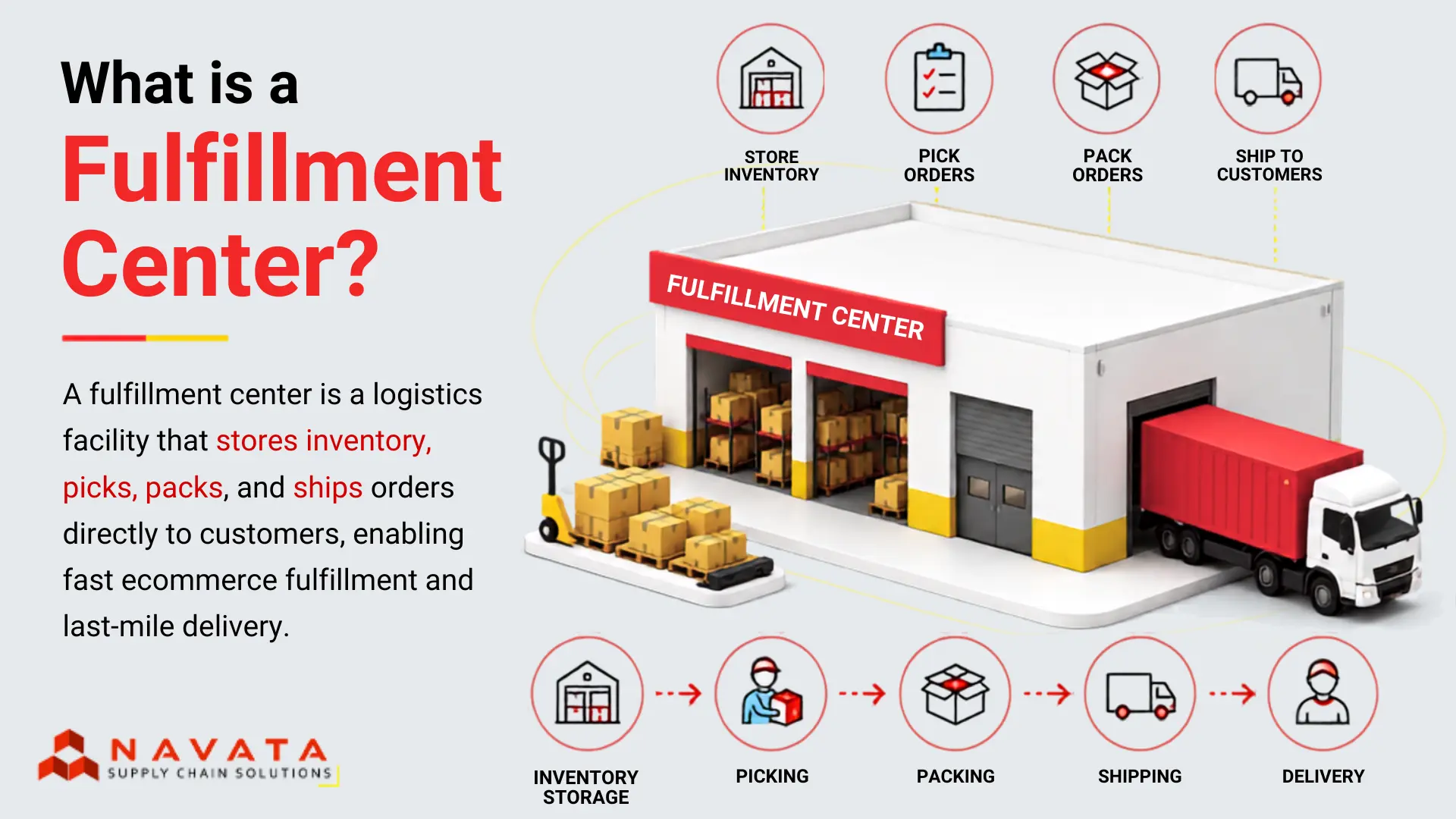
    A fulfillment center is a purpose-built facility that receives inbound inventory from manufacturers or brands, stores it at SKU level, picks individual items against customer orders, packs and labels shipments, and hands them over to carrier networks for last-mile delivery. Unlike general storage, every square foot of a fulfillment center is optimized for order velocity.

    The phrase “what is a fulfillment center” gets searched thousands of times a month in India, yet most definitions confuse it with a warehouse. The distinction is operational, not semantic. A warehouse stores. A fulfillment center ships.

    In the ecommerce context, a fulfillment center sits between a brand’s supplier or manufacturing unit and the end consumer. Inventory arrives in bulk, is received and quality-checked, binned at the SKU level, and then pulled in real time as orders arrive from Shopify stores, Amazon India, Flipkart, Meesho, or the brand’s own D2C website. The fulfillment lifecycle from order capture to dispatch typically runs in 4-8 hours in a well-run facility, compared to 24-72 hours in a warehouse picking operation.

    For D2C brands, marketplace sellers, and ecommerce operators, the fulfillment center is not a cost center. It is the operational core that determines customer experience, NPS scores, return rates, and ultimately repeat purchase behavior.

    Fulfillment Center vs Warehouse vs Distribution Center

    Most logistics discussions use “warehouse,” “distribution center,” and “fulfillment center” interchangeably. They are not the same, and choosing the wrong model has real consequences for order speed, cost per shipment, and customer satisfaction. Here is the definitive comparison across every operational dimension.

    The Definitive Comparison: Warehouse vs Distribution Center vs Fulfillment Center vs Dark Store
    Dimension Warehouse Distribution Center Fulfillment Center Dark Store
    Primary Purpose Long-term bulk storage Intermediate inventory redistribution to retail Direct-to-consumer order fulfillment Hyperlocal fulfillment for same-hour delivery
    Inventory Turnover Slow (weeks to months) Medium (days to weeks) Fast (hours to days) Ultra-fast (minutes to hours)
    Typical Order Size Pallets / full truckloads Cases / pallets Single units / multi-SKU parcels 1–5 SKUs per order
    Delivery SLA Not applicable (B2B dispatch) 24–72 hrs to retail store 24–72 hrs to consumer 10–45 minutes to consumer
    Technology Stack Basic WMS, manual picking WMS + transport management WMS + OMS + carrier API + returns portal Micro-WMS + hyperlocal dispatch engine
    Automation Level Low Medium Medium to High Medium (compact automation)
    Location Strategy Industrial outskirts, low-cost land Transport highway nodes Near urban demand centers Inside city limits, 2–5 km radius
    Inventory Type Raw materials, seasonal stock Finished goods in bulk Consumer-ready SKUs High-velocity consumer items
    Typical Customer Manufacturers, importers, B2B traders FMCG brands, retail chains D2C brands, ecommerce sellers, marketplace sellers Quick-commerce platforms (Blinkit, Zepto, Swiggy Instamart)
    Ecommerce Capability None or minimal Limited Core function Designed exclusively for ecommerce
    Last-Mile Integration Minimal Retail distribution Carrier API integration + COD Hyperlocal rider fleet integration
    Cost Model Per-sqft or per-pallet storage Storage + handling Storage + pick + pack + ship Per-order micro-fulfillment + platform fee
    Best Use Cases Seasonal inventory buffering, raw material storage National FMCG distribution, retail replenishment D2C ecommerce, marketplace fulfillment Grocery, pharma, convenience, quick-commerce

    This table is the clearest answer available to the fulfillment center vs warehouse debate. The core distinction: warehouses optimize for storage economics; fulfillment centers optimize for order throughput speed.

    How an Ecommerce Fulfillment Center Operates Day-to-Day

    The operational magic of an e-commerce fulfillment center is invisible to the consumer but determines whether a package arrives in 24 hours or five days. Every step in the process is a potential failure point — and a well-run 3PL partner eliminates each one through standard operating procedures, technology, and trained labor.

    Here is how a modern e-commerce fulfillment center processes inventory from inbound receipt to customer delivery.

    Step 1:-  Inbound Receiving Goods arrive from the seller’s manufacturer or warehouse via truck, courier, or air freight. The facility team checks the shipment against the advance shipping notice (ASN), counts units by SKU, and logs the receipt timestamp in the WMS. Any discrepancy triggers a hold for resolution before inventory enters the live pool.

    Step 2:-  Quality Checks: At receiving, random sampling or 100% inspection (depending on the category) is performed. For apparel, this includes size label verification. For electronics, it includes box seal integrity. For FMCG, it includes expiry date validation. Failed units are quarantined, and a discrepancy report is sent to the seller within the agreed SLA.

    Step 3:-  Putaway: Accepted inventory is assigned a bin location within the fulfillment center — either through system-directed putaway (the WMS tells the picker where to place it) or zone-based logic. High-velocity SKUs are slotted nearest the packing stations to reduce travel time. Putaway accuracy is typically measured at 99.5%+ in tier-1 facilities.

    Step 4:-  Inventory Storage SKUs rest in their assigned bin locations until an order is received. A well-designed fulfillment center maintains real-time inventory visibility at bin level — meaning, at any given moment, the system knows exactly how many units of each SKU are available, reserved against open orders, or held in quarantine. This eliminates the overselling problem common in brands managing their own inventory.

    Step 5:- Order Capture: When a customer places an order on Shopify, Amazon India, Flipkart, or any connected channel, the OMS receives it in real time via API integration. The order is validated against available inventory, and a pick ticket is generated. For multi-channel sellers, the OMS resolves which fulfillment center handles the order based on inventory proximity to the delivery PIN code.

    Step 6:-  Picking A picker receives the pick ticket — either on a handheld scanner, wearable device, or voice-directed terminal — and walks or drives to the assigned bin. The item is scanned at the bin to confirm the correct SKU and placed in a tote or cart. In robotics-enabled facilities (like Amazon’s fulfillment centers in Pune and Mumbai), shelves travel to the picker rather than the picker traveling to the shelf.

    Step 7:-  Packing At the packing station, the picker or a dedicated packer verifies the item against the order, selects appropriate packaging (poly bag, carton, bubble wrap), inserts any required inserts (invoice, marketing collateral, return label), and seals the package. Dunnage — void fill or bubble cushioning — is added for fragile items.

    Step 8:-  Label Generation: The system generates a shipping label with the carrier’s barcode, the delivery address, order ID, and any special instructions (COD, fragile, refrigerated). Labels are printed at the packing station and affixed to the package before it enters the outbound sort.

    Step 9:-  Carrier Allocation: The OMS or WMS selects the optimal carrier for each shipment based on the destination PIN code, delivery SLA, weight, and negotiated rates. In multi-carrier environments (common with 3PLs like Delhivery, Shadowfax, Ekart, or Navata Supply Chain Solutions), the system routes the order to the fastest and most cost-effective carrier for that specific destination.

    Step 10:-  Shipping Packages are sorted by carrier, consolidated into carrier manifests, and handed over at the dispatch dock. Most fulfillment centers have fixed carrier pickup windows — typically 2–4 PM for same-day dispatch. Orders confirmed before the cut-off time are dispatched that day.

    Step 11:-  Tracking Updates: As the carrier scans the package at their facility, tracking events are generated and pushed back to the OMS, which updates the seller’s platform. Customer-facing tracking notifications — SMS, WhatsApp, or email are triggered automatically. A well-integrated 3PL partner ensures tracking visibility from dispatch to delivery attempt.

    Step 12:-  Returns Processing: When a customer initiates a return, the reverse logistics flow begins. The carrier collects the package from the customer and delivers it to the designated returns processing location — either the original fulfillment center or a dedicated returns hub. At the facility, the returned item is inspected, graded (sellable, refurbish, dispose), and the system updates inventory accordingly. Returns that are sellable are restocked to the active inventory pool.

    The Technology Stack: WMS, OMS, Scanners, Robotics

    Technology is the difference between a fulfillment center and a room full of boxes. The modern ecommerce fulfillment operation runs on a layered technology stack where each system solves a specific operational problem — and the quality of integration between systems determines actual throughput speed and accuracy.

    A mature fulfillment center technology stack includes the following components.

    Warehouse Management System (WMS) The warehouse management system is the brain of the facility. It controls bin assignments, directs putaway and picking, manages inventory at the license plate or unit level, tracks labor productivity, and generates compliance labels. Enterprise-grade WMS platforms integrate with ERPs, OMS platforms, and carrier APIs. For 3PL operators serving multiple clients, the WMS provides client-level inventory segregation, reporting, and billing logic. A robust warehouse management system is the single most important technology investment a fulfillment center can make.

    Order Management System (OMS) The OMS sits above the WMS and manages the order lifecycle from placement to delivery. It routes orders to the right fulfillment center based on inventory positioning, manages multi-channel order consolidation, handles order modifications and cancellations, and triggers post-dispatch notifications. For brands selling on Amazon India, Flipkart, Meesho, and their own D2C website simultaneously, the OMS is the orchestration layer that prevents overselling and ensures the right inventory is allocated to the right order.

    Barcode Systems and RFID Every bin, tote, carton, and pallet in a modern fulfillment center carries a barcode or RFID tag. Scan-on-put, scan-on-pick, and scan-on-pack workflows enforce accuracy at every step and create a complete audit trail. RFID enables bulk scanning without line-of-sight, significantly accelerating inbound receiving and cycle counting. High-volume operations — like Flipkart’s fulfillment network or Delhivery’s logistics centers — use RFID gates at dock doors to capture entire pallet receipts in seconds.

    Handheld Scanners and Wearables Pickers and packers carry handheld barcode scanners or wrist-mounted ring scanners to confirm bin locations, SKU IDs, and package seals at every operation. Voice-directed picking — where the WMS speaks pick instructions through a headset and the picker confirms verbally — is increasingly deployed in high-volume fashion and FMCG operations where screen reading is impractical.

    Robotics and Goods-to-Person Systems Amazon’s fulfillment centers in Pune, Mumbai, and Hyderabad deploy Kiva-derived robotic shelf systems where mobile drive units carry entire shelving pods to stationary pickers. This eliminates walk time — the largest single source of labor waste in traditional pick-and-walk operations — and allows a single picker to process 300–400 units per hour rather than 80–120. Conveyor-based sortation systems route packages to the correct packing station or outbound carrier lane automatically.

    Slotting Optimization Slotting is the science of assigning SKUs to bin locations based on velocity, dimensions, and co-pick frequency. A well-slotted fulfillment center keeps the top 20% of SKUs by order frequency within arm’s reach of the packing stations, reducing pick travel by 40–60%. Slotting logic runs as a module within the WMS and is re-optimized periodically as sales velocity shifts.

    Real-Time Inventory Visibility Modern 3PL platforms expose real-time inventory dashboards to seller clients — showing stock on hand, reserved units, units in transit, and units in returns processing. This visibility enables sellers to make informed replenishment decisions, set reorder points, and avoid stockouts without maintaining their own inventory management staff.

    API Integrations A fulfillment center’s commercial value depends on how cleanly it integrates with the seller’s tech stack. Production-ready integrations include Shopify, WooCommerce, Magento, Amazon Seller Central, Flipkart Seller Hub, Meesho Supplier Portal, and custom ERP systems. API-first fulfillment partners reduce onboarding time from weeks to days.

    Fulfillment Centers in India Geography & Coverage

    India’s ecommerce logistics map is built around six tier-1 metros, each serving as a demand hub, a network node, and a regional distribution anchor. Inventory positioning across these cities determines how many orders a brand can fulfill within 24 hours — and how much it pays per shipment.

    Bangalore Bangalore is India’s highest-value ecommerce demand cluster, driven by a dense concentration of tech workers with high average order values. Fulfillment centers in Bangalore serve not just the metro but also the broader Karnataka market and parts of Tamil Nadu. Proximity to Bangalore International Airport supports air freight inbound flows for high-value electronics and fashion. Same-day delivery capability within the BBMP limits is available from centrally located urban fulfillment centers.

    Chennai Chennai anchors southern India’s logistics network, connecting to Pondicherry, Coimbatore, Madurai, and Sri Lanka. Warehouses in Chennai benefit from proximity to Chennai Port, making them strategically important for brands with significant import volumes. The city’s industrial corridors — Ambattur, Guindy, Sriperumbudur — host established warehousing infrastructure with strong road connectivity to the broader Tamil Nadu market.

    Hyderabad Hyderabad’s dual-city structure (GHMC and Cyberabad) creates a diverse ecommerce demand base spanning IT professionals, traditional retail buyers, and B2B buyers. Warehouses in Hyderabad are increasingly positioned along the Outer Ring Road, which provides fast access to both RGIA airport and the national highway network to Maharashtra and Karnataka. Hyderabad-based inventory can reach Vijayawada, Visakhapatnam, and Bengaluru within 24 hours by road.

    Mumbai Mumbai remains India’s largest ecommerce market by GMV, driven by the highest urban population density and the strongest concentration of premium buyers. Fulfillment centers in Mumbai — primarily clustered in Bhiwandi, Thane, and Navi Mumbai — benefit from the Mumbai-Pune Expressway and proximity to JNPT port for import-heavy categories. Mumbai’s fulfillment capacity is essential for brands targeting western India with 24-hour SLAs.

    Delhi NCR Delhi NCR commands the largest geographic market catchment in India, with fulfillment centers positioned in Gurgaon, Manesar, Noida, and Greater Noida serving the north Indian market from Rajasthan to Bihar. The NH-48 and Yamuna Expressway provide strong ground connectivity, while IGI Airport handles the largest air cargo volumes in the country. For national brands, Delhi NCR is typically the first fulfillment hub in a multi-city network design.

    Kolkata Kolkata is the gateway to eastern India — serving West Bengal, Odisha, Jharkhand, Bihar, and the northeast states. Fulfillment centers in Kolkata provide coverage for markets that are difficult to reach within acceptable SLAs from Delhi NCR or Mumbai nodes. Brands targeting the east Indian market typically stage inventory in Kolkata to unlock 48-hour delivery capability to Tier-2 and Tier-3 cities in the region.

    Navata Supply Chain Solutions operates warehousing services across these strategic nodes, enabling brands to design multi-city inventory networks without capital investment in owned infrastructure.

    Dark Store Fulfillment: The New Generation of Urban FCs

    Dark store fulfillment represents a fundamentally different fulfillment model — one that prioritizes delivery speed over storage efficiency and serves the hyperlocal, sub-60-minute delivery expectations that quick-commerce platforms have trained urban consumers to expect.

    What Is a Dark Store? A dark store is a small-format, urban fulfillment facility — typically 2,000–10,000 sq ft — located inside a city’s residential neighborhoods, designed exclusively for rapid consumer order fulfillment. Unlike a fulfillment center, which optimizes for throughput across hundreds of SKUs, a dark store carries a curated selection of 2,000–5,000 high-velocity SKUs positioned within 2–5 km of the customers it serves. The “dark” designation reflects that these stores are closed to walk-in customers — they exist purely to fulfill app-based orders.

    Dark Store vs Fulfillment Center: Key Differences A traditional fulfillment center handles orders with delivery windows of 24–72 hours, serves entire metro regions from a single large facility, and carries broad SKU depth across hundreds of categories. A dark store, by contrast, targets delivery within 10–45 minutes, operates from multiple micro-locations distributed throughout a city, and stocks only the fastest-turning SKUs. The inventory replenishment model is also inverted: dark stores are refilled daily or twice daily from a larger regional fulfillment center or distribution hub.

    The Quick-Commerce Model Blinkit operates a network of approximately 1,000+ dark stores across 30 cities, with the highest density in Bangalore, Delhi NCR, Mumbai, and Hyderabad. Zepto has expanded to 700+ dark stores, emphasizing 10-minute delivery as a core product feature. Swiggy Instamart operates a similar dark store network, leveraging Swiggy’s existing delivery fleet. According to RedSeer research, India’s quick-commerce sector is expected to reach $5 billion in GMV by 2025, driven almost entirely by the dark store fulfillment model.

    10-Minute Delivery Economics The economics of 10-minute delivery depend on three variables: dark store density (how many stores per square kilometer of coverage area), inventory accuracy (no stockouts on high-velocity items), and rider fleet density. Blinkit and Zepto maintain profitability per order through basket size minimums, platform fees, and delivery charges that offset the higher operational costs of hyperlocal fulfillment. For D2C brands, the strategic question is whether to supply inventory to quick-commerce platforms or to build their own dark store network — a decision that depends heavily on order volume, category, and city coverage requirements.

    See Navata’s dark store fulfillment centers across Bangalore, Chennai, and Hyderabad.

    Navata Supply Chain Solutions operates dark store fulfillment in Bangalore, dark store fulfillment in Chennai, and dark store fulfillment in Hyderabad enabling D2C brands to reach their urban customers within the hour without the capital cost of building and staffing their own dark store network.

    When a D2C Brand Needs Its Own FC vs a 3PL

    The build-vs-buy decision in fulfillment is one of the most consequential choices a growing ecommerce brand makes. Getting it wrong — either too early or too late — costs significantly in terms of cash, operational bandwidth, and customer experience. The right answer depends on order volume, geographic complexity, product category, and where the brand is in its growth cycle.

    In-House Fulfillment: The Case For Brands shipping fewer than 500 orders per month, brands with extremely complex assembly or kitting requirements, brands with highly sensitive products requiring controlled handling, and brands that treat the unboxing experience as a core brand differentiator may find in-house fulfillment operationally justified. The control and flexibility of owned operations is real — but the cost and complexity scale aggressively beyond 1,000 orders per month.

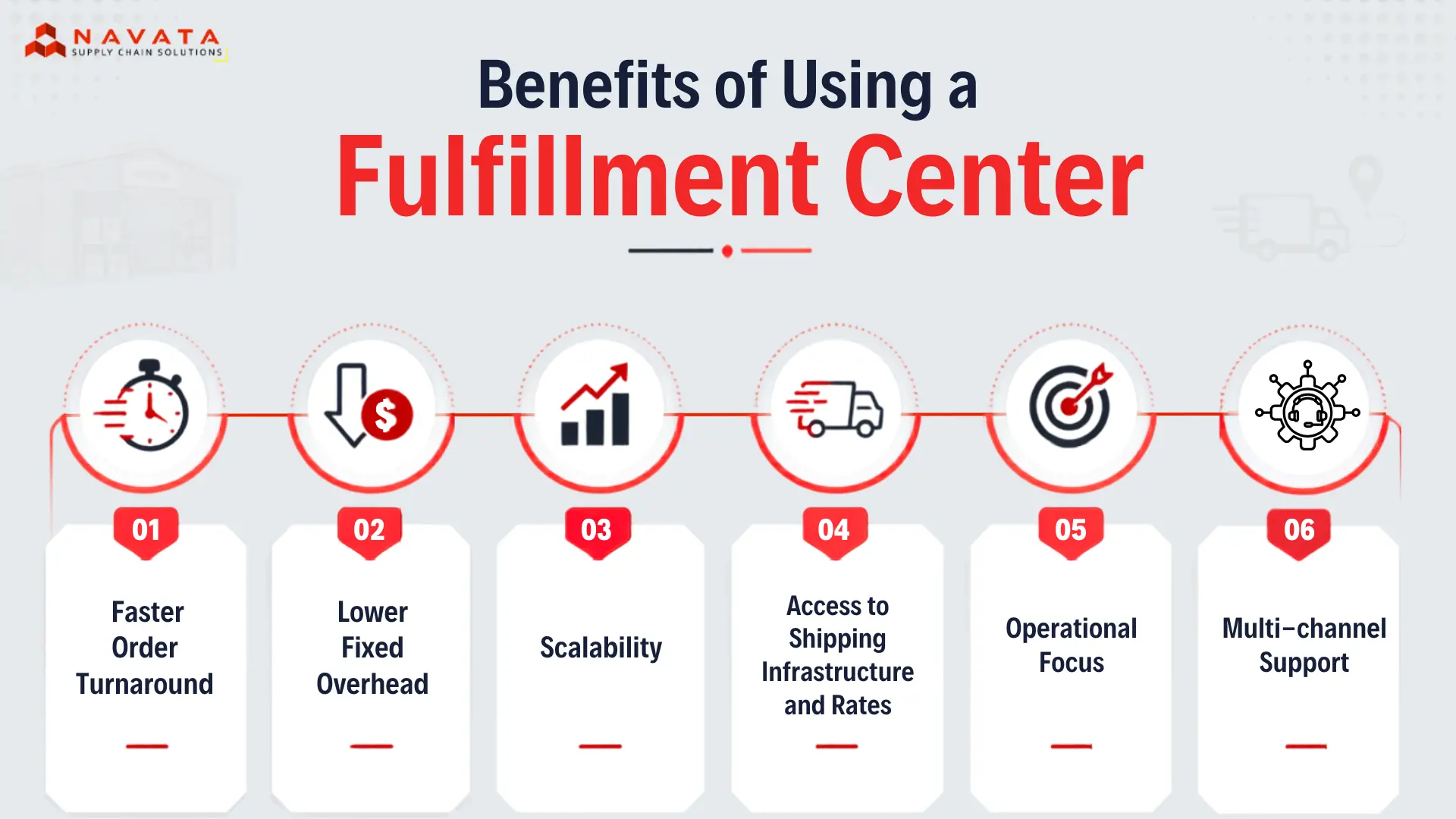
    Third-Party Logistics (3PL): The Case For A 3PL fulfillment partner eliminates fixed infrastructure costs, converts per-order economics to variable costs, provides instant multi-city coverage without capital investment, and brings pre-built integrations with every major carrier and marketplace. For brands crossing 1,000–2,000 orders per month, the total cost of 3PL fulfillment is almost always lower than in-house once labor, rent, WMS licensing, and management overhead are correctly accounted for.

    Decision Framework: In-House vs 3PL Fulfillment
    Scenario Recommended Approach
    < 500 orders/month In-house (cost-effective, manageable)
    500–2,000 orders/month Evaluate 3PL — likely cost-neutral or favorable
    2,000–5,000 orders/month 3PL strongly recommended
    5,000+ orders/month Multi-node 3PL or dedicated fulfillment partner
    Multi-city coverage needed 3PL (immediate network access)
    Marketplace + D2C + quick-commerce mix 3PL with multi-channel OMS
    High return rate (>20%) 3PL with specialized returns management
    Dark store fulfillment required Specialist 3PL with urban micro-FC network

    Dedicated Fulfillment Operations At scale typically 50,000+ orders per month brands often explore dedicated fulfillment arrangements where a 3PL operates a ring-fenced facility exclusively for that client. This model provides the control and customization of in-house operations with the operational expertise and infrastructure of a specialist logistics partner. Meesho’s fulfillment ecosystem, which relies on a network of 3PL partners operating dedicated nodes, is a well-documented example of this hybrid model working at scale.

    Fulfillment Center Cost in India: Per-Order, Per-Pallet, Storage

    Cost transparency is the single biggest gap in India’s 3PL market. Most fulfillment partners quote a per-order rate that obscures the full cost picture omitting storage fees, packaging material charges, returns processing, technology integration fees, and minimum volume commitments. This section provides a comprehensive breakdown of the actual cost components and realistic INR ranges based on current market benchmarks.

    Note: All pricing represents estimated industry benchmarks as of 2025–26. Actual rates vary by city, volume, product category, automation level, and SLA requirements. Always request itemized pricing from prospective partners.

    Fulfillment Center Cost in India: Estimated Industry Benchmarks (2026)
    Storage Costs
    Cost Component Estimated Range (INR) Notes
    Per pallet/month ₹800 – ₹2,500 Higher in Mumbai and Bangalore; lower in Tier-2 cities.
    Per sqft/month ₹18 – ₹55 Depends on location, racking type, and climate control requirements.
    Minimum storage fee ₹5,000 – ₹25,000/month Applied regardless of actual storage volume.
    Fulfillment Costs
    Cost Component Estimated Range (INR) Notes
    Pick fee (per line item) ₹8 – ₹25 Lower at high volumes; higher for fragile or oversized products.
    Pack fee (per order) ₹15 – ₹45 Includes station time, taping, and label application.
    Per-order fulfillment fee ₹35 – ₹120 Bundled pick and pack charges; varies by fulfillment center type.
    Returns processing fee ₹40 – ₹150 Charged per returned unit received and processed.
    Packaging Materials
    Material Estimated Range (INR)
    Poly bag (small) ₹2 – ₹8 per unit
    Corrugated carton (small) ₹12 – ₹35 per unit
    Bubble wrap (per meter) ₹4 – ₹10
    Custom-branded box ₹25 – ₹80 per unit (volume-dependent)
    Technology Costs
    Component Estimated Range (INR)
    WMS access fee ₹2,000 – ₹15,000/month per client
    Integration setup (Shopify, Amazon, etc.) ₹5,000 – ₹30,000 one-time
    API integration maintenance ₹0 – ₹5,000/month
    Transportation (Outbound per Shipment)
    Zone Estimated Range (INR) Notes
    Local (same city) ₹35 – ₹80 Weight under 500g.
    Regional (adjacent states) ₹60 – ₹130 Weight between 500g and 1kg.
    National (Pan-India) ₹90 – ₹220 Weight between 500g and 1kg; remote areas cost more.
    COD handling fee ₹20 – ₹60 per order Charged by carrier and deducted during remittance.
    Cost Example: D2C Brand Shipping 10,000 Orders per Month
    Assumptions: Bangalore-based fulfillment center, average order weight 600g, 2 SKUs per order, standard packaging, 70% prepaid / 30% COD, 8% return rate (800 returns), and a pan-India shipping mix.
    Cost Category Monthly Estimate (INR)
    Storage (5 pallets @ ₹1,800/pallet) ₹9,000
    Pick + Pack (10,000 orders @ ₹70) ₹7,00,000
    Packaging Materials (₹25/order) ₹2,50,000
    Outbound Shipping (10,000 orders @ avg ₹120) ₹12,00,000
    COD Handling (3,000 orders @ ₹40) ₹1,20,000
    Returns Processing (800 returns @ ₹80) ₹64,000
    WMS + Technology Fee ₹8,000
    Estimated Total ~ ₹23,51,000/month
    Estimated Cost per Order ~ ₹235/order

    This per-order cost is the fulfilment operations cost only it excludes product cost, customer acquisition cost, and platform commission. At 10,000 orders per month, a well-negotiated 3PL arrangement typically delivers 15–25% lower cost-per-order compared to equivalent in-house operations once true overheads are included.

    Brands evaluating warehousing services should always request a full cost breakdown across all line items not just a headline per-order rate to accurately compare partner economics.

    How to Choose a Fulfillment Center Partner in India

    The fulfillment partner decision is not a vendor selection exercise. It is a strategic infrastructure choice that will determine your customer experience, cash flow, and operational scalability for the next 2–5 years. The wrong partner costs you in SLA breaches, returns mismanagement, and expensive re-migrations. Evaluate every prospective partner against the following criteria before signing a contract.

    Fulfillment Partner Evaluation Checklist

    Coverage

    • Does the partner have facilities in your priority fulfillment cities (Bangalore, Delhi NCR, Mumbai, Chennai, Hyderabad, Kolkata)?
    • Can they deliver to 100% of serviceable PIN codes nationally?
    • Do they offer dark store fulfillment for hyperlocal or quick-commerce requirements?

    Technology

    • Do they operate a proprietary WMS or a reputable third-party platform?
    • Do they have production-ready integrations with your sales channels (Shopify, Amazon, Flipkart, Meesho)?
    • Can they provide real-time inventory visibility via API or dashboard?
    • Is their warehouse management system capable of supporting multi-channel order routing?

    SLA Performance

    • What is their documented same-day dispatch rate?
    • What pick-and-pack accuracy rate do they contractually guarantee?
    • What are the financial penalties for SLA breaches?

    Scalability

    • Can they accommodate 3x–5x volume spikes during Diwali, Big Billion Days, or sales events without degradation?
    • Do they support multi-city expansion without full re-onboarding?

    Returns Capability

    • Do they operate dedicated returns processing or outsource it?
    • What is the average turnaround time from return receipt to inventory restocking?
    • Can they handle returns grading and refurbishment?

    Cost Transparency

    • Do they provide itemized pricing across every cost component?
    • Are minimum volume commitments disclosed upfront?
    • Is packaging material pricing bundled or itemized?

    Reporting

    • Do they provide daily inventory reconciliation reports?
    • Can they generate category-level cost-per-order analytics?
    • Are carrier performance reports available?

    Industry Expertise

    • Do they have documented experience with your product category (fashion, electronics, FMCG, pharma)?
    • Can they provide references from brands at your scale?
    • Do they understand marketplace-specific compliance requirements (Amazon FBA norms, Flipkart packaging standards)?
    FAQs

    Q1. Is a fulfillment center the same as a warehouse?
    No. A warehouse stores bulk inventory for extended periods, typically for B2B dispatch or retail replenishment. A fulfillment center stores consumer-ready inventory and processes individual customer orders picking, packing, labeling, and dispatching directly to end consumers, usually within the same day the order is placed. The technology stack, labor model, and location strategy are fundamentally different.

    Q2. How much does a fulfillment center cost in India?
    Fulfillment center costs in India depend on city, volume, category, and SLA requirements. A realistic estimate for a D2C brand shipping 10,000 orders per month ranges from ₹200–₹280 per order all-in, including storage, pick-and-pack, packaging, outbound shipping, and returns processing. Brands shipping 50,000+ orders per month typically negotiate significantly lower per-order rates through volume pricing and dedicated facility arrangements.

    Q3. What is the difference between FC and DC?
    A fulfillment center (FC) ships directly to individual consumers it is the last logistics touchpoint before a product reaches the buyer. A distribution center (DC) ships in bulk to retail outlets, other warehouses, or regional hubs — it is an intermediate node in the supply chain. FCs are built for consumer order velocity; DCs are built for bulk movement efficiency.

    Q4. Do D2C brands need multiple fulfillment centers?
    Typically, yes, once monthly order volume crosses 5,000 orders or the brand’s geographic spread spans more than one or two regions. A multi-node fulfillment network positions inventory closer to demand clusters, reducing average shipping distance, cutting per-order transport cost by 15–30%, and enabling next-day or same-day delivery to more PIN codes. Most growing D2C brands establish their first node in their home market, then add Bangalore, Delhi NCR, or Mumbai as second and third nodes.

    Q5. How is Amazon’s fulfillment center different from a regular FC?
    Amazon’s fulfillment centers (FCs) in India, located in Pune, Mumbai, Hyderabad, Bangalore, and Delhi NCR, operate at a scale and automation density that is significantly beyond standard 3PL fulfillment centers. Amazon deploys robotics, AI-driven slotting optimization, and demand-anticipatory inventory positioning that preemptively move products closer to predicted demand before orders are placed. For sellers using Amazon FBA India, these capabilities are accessible but come with strict inbound compliance, labeling requirements, and fee structures specific to Amazon’s ecosystem.

    Q6. What is a dark store, and how is it different from a fulfillment center?
    A dark store is a small-format, urban micro-fulfillment facility closed to walk-in customers that stocks a curated selection of high-velocity SKUs and fulfills orders within 10-45 minutes of placement. A fulfillment center typically covers an entire metro area from a single large facility with 24-72-hour delivery. A dark store covers a 2–5 km radius from multiple city-interior locations with same-hour delivery. The inventory model, facility footprint, and carrier/rider integration are all distinct.

    Q7. How long does it take to set up a fulfillment center in India?
    Setting up a fulfillment center with a 3PL partner typically takes 2-6 weeks, covering facility assignment, WMS configuration, channel integration, packaging material procurement, and staff training. In-house setup of a new fulfillment facility typically takes 3-6 months and requires lease negotiation, racking installation, WMS licensing, hiring, and SOP development. For brands that need rapid deployment, a 3PL partner is the significantly faster path to operational readiness.