
What Is an OMS?
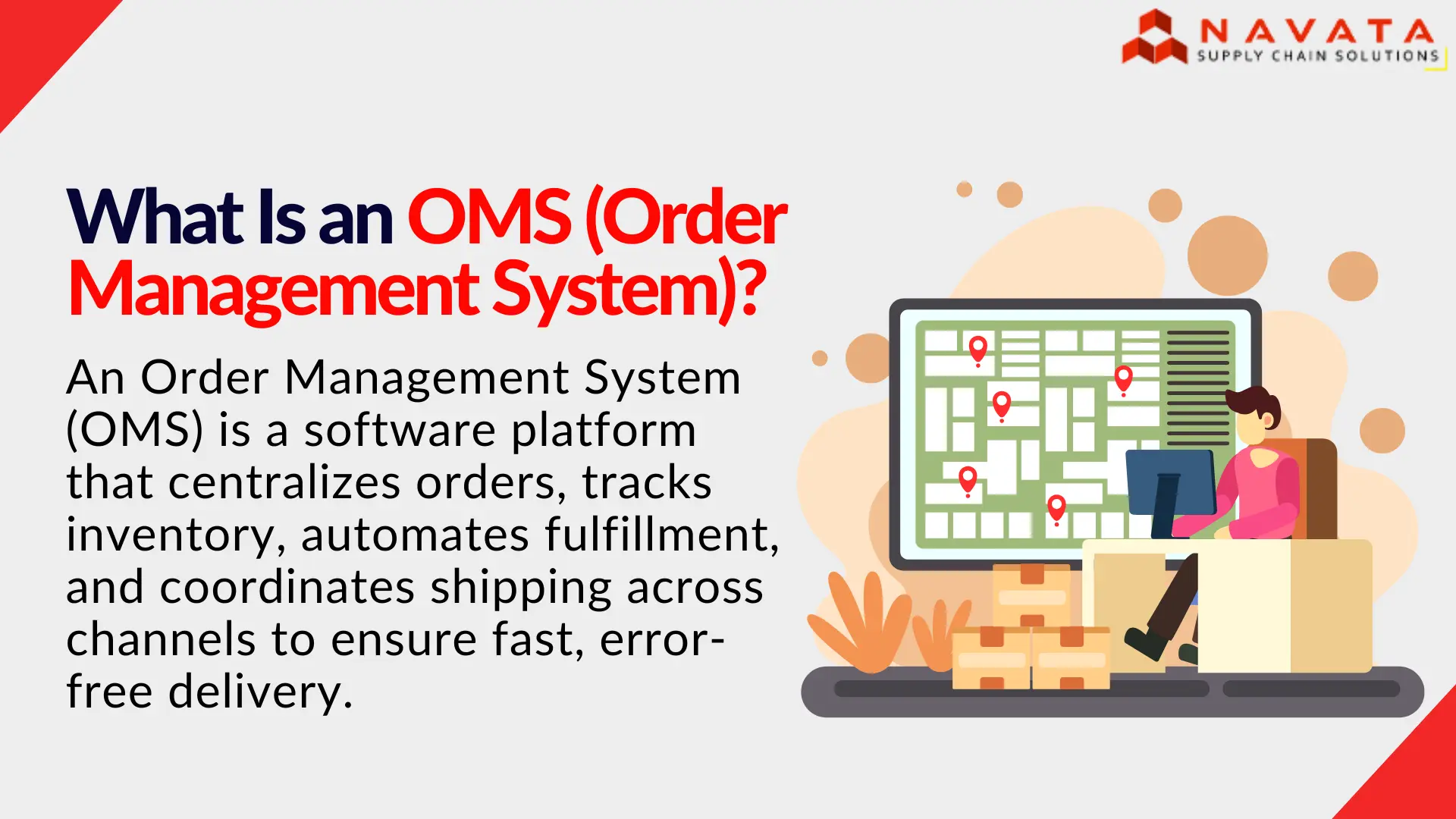
An OMS is a centralized software platform that manages the end-to-end order lifecycle across multiple sales channels. It ensures that every order is captured, validated, routed, fulfilled, tracked, and delivered with complete accuracy and real-time visibility.
In other words, it is the single source of truth for:
Orders
Inventory
Payments
Fulfillment
Returns
Customer updates
A modern OMS is essential for brands operating across online stores, marketplaces, e-commerce, offline stores, dark stores, warehouses, and quick commerce platforms.
You May Also Like to Read: E-commerce Inventory Management: Challenges, Control & Solutions
Why OMS Matters Today (The Real Problem It Solves)
Most brands struggle because their order processing is scattered across spreadsheets, ERPs, marketplace panels, and warehouse teams.
This leads to:
Incorrect inventory
Overselling and underselling
Cancelled or late orders
Poor customer communication
Slow fulfillment
High RTO for eCommerce
Inefficient multi-warehouse operations
OMS solves all of this through centralization + automation + intelligence.
How an OMS Works (The Full Lifecycle)
A robust OMS handles the entire operational pipeline:
1. Order Capture Across Channels
Orders flow in from anywhere:
Shopify / WooCommerce
Amazon, Flipkart, Meesho
Quick commerce apps
Retail POS systems
B2B portals
The OMS standardizes and consolidates everything in one dashboard.
2. Real-Time Inventory Accuracy
Inventory is synced across:
Warehouses
Dark stores
Fulfillment centers
Offline stores
In-transit stock
This eliminates stockouts and overselling—one of the biggest pain points for retailers.
3. Intelligent Order Routing & Allocation
The OMS automatically chooses the best fulfillment point based on:
Closest warehouse
Stock availability
Shipping SLA
Cost optimization
Delivery promise to customer
This helps reduce both shipping cost and delivery time.
4. Automated Fulfillment Workflows
Once an order is routed, the OMS triggers:
Picking
Packing
QC
Label generation
Dispatch
This reduces manual effort and speeds up warehouse operations.
5. Real-Time Shipment Tracking
Customers and brands get live updates:
Picked
Packed
Shipped
Out for delivery
Delivered
This enhances the post-purchase experience—where most brand loyalty is won or lost.
6. Returns & RTO Management
OMS handles:
RTO prediction
Reverse pickup
Automated refunds
Return-to-stock workflows
This is crucial for eCommerce profitability.
Key Features of a Modern OMS
1. Centralized Order Processing
A modern OMS brings every order—whether from your website, marketplaces, or offline stores—into a single synchronized dashboard. This eliminates channel silos, reduces manual intervention, and provides full visibility into order status, customer details, payment verification, and fulfillment progress. It becomes the operational command center for managing high-volume, multi-channel commerce with precision.
2. Real-Time Multi-Location Inventory
OMS provides dynamic inventory accuracy across warehouses, dark stores, retail outlets, and in-transit stock. Every sale, return, or stock movement updates in real time, preventing overselling, stockouts, and mis-picks. This visibility helps brands forecast better, plan replenishments smarter, and maintain optimal inventory levels across all channels—critical for omnichannel and fast-moving retail operations.
3. Smart Order Routing
The system automatically chooses the most efficient fulfillment point by analyzing stock availability, customer location, shipping cost, delivery SLA, and warehouse performance. Intelligent routing ensures orders are dispatched from the closest and most cost-effective node, reducing transit times, minimizing last-mile expenses, and improving the overall delivery promise to customers.
4. Automated Shipping & Carrier Selection
OMS evaluates multiple courier partners in real time, comparing factors such as serviceability, shipping rates, delivery timelines, and COD availability. Based on predefined business rules, it automatically selects the best-fit carrier for each order. This removes manual decision-making, avoids delays, and ensures consistent, SLA-driven fulfillment for every shipment.
5. Multi-Channel Integration
A robust OMS integrates seamlessly with eCommerce platforms, marketplaces, POS systems, ERPs, WMS platforms, and accounting tools. These integrations enable smooth data flow—orders, inventory, pricing, SKUs, and customer information remain consistent across all systems. This interconnected ecosystem reduces discrepancies, simplifies operations, and ensures unified control across every sales and fulfillment channel.
6. Reverse Logistics & RTO Control
OMS streamlines returns and failed delivery workflows by automating reverse pickups, updating customers, and routing items back into inventory. It identifies high-risk orders using customer behavior, location insights, and past delivery patterns—helping reduce RTO rates. With structured return-to-stock processes, brands minimize losses, improve resale velocity, and maintain healthier inventory cycles.
Optimize Your Supply Chain with Experts!
Benefits of Using OMS
1. Faster Order Processing
An OMS automates order capture, verification, and routing, eliminating manual steps and reducing fulfillment errors. This boosts processing speed, shortens dispatch timelines, and enables brands to handle high-volume sales with consistent accuracy—especially during peak demand or multi-channel surges.
2. Lower Logistics and Fulfillment Costs
With intelligent warehouse selection and automated carrier allocation, an OMS minimizes shipping distances, transit time, and last-mile costs. It also prevents mis-shipments and RTO losses, helping brands achieve significantly leaner operational and logistics spending without compromising delivery performance.
3. Real-Time Inventory Visibility
OMS synchronizes inventory across warehouses, online marketplaces, retail stores, and dark stores, ensuring a single source of truth. This real-time view supports better forecasting, timely replenishment, and optimized stock planning, reducing the risk of stockouts, overstocking, and delayed fulfillment.
4. Higher Customer Satisfaction
Accurate ETAs, fast processing, proactive updates, and real-time tracking enhance the customer delivery experience. OMS-driven consistency strengthens brand trust, reduces WISMO (“Where is my order?”) queries, and improves repeat purchase rates through reliable, on-time fulfillment.
5. Improved Multi-Channel Profitability
A strong OMS increases revenue across D2C sites, marketplaces, offline stores, and quick commerce networks by unifying operations and preventing channel conflicts. Optimized inventory flow, faster deliveries, and efficient allocation directly contribute to higher margins and long-term profitability.

You May Also Like to Read: Top 7 Challenges in Supply Chain Operations & Solutions
Who Needs an OMS?
Brands experiencing the following must implement an OMS urgently:
Stock discrepancies across channels
High order volumes
Multi-warehouse or multi-store operations
Growing cancellations / RTO
Slow delivery or high last-mile cost
No unified operational visibility
It’s essential for eCommerce, retail, quick commerce, B2B distribution, and D2C brands.
OMS vs WMS vs ERP (Quick Clarification)
These systems complement each other—but don’t replace each other.
| System | Purpose |
|---|---|
| OMS | Manages orders, routing, inventory, customer notifications |
| WMS | Manages storage, picking, packing, and warehouse workflows |
| ERP | Manages accounting, finance, procurement, HR |
An OMS is the operational layer that connects everything.
How OMS Helps in Omnichannel Retail
A powerful OMS unlocks advanced features like:
Ship-from-store
Click & collect
Dark store fulfillment
In-store pickup
Endless aisle inventory
This is the future of retail, especially for fashion, FMCG, beauty, electronics, and grocery.
Learn More About: Power of Data and Analytics in Supply Chain Management
Conclusion
An Order Management System is no longer optional—it’s the backbone of modern commerce.
Brands that adopt OMS experience faster fulfillment, higher accuracy, happier customers, and scalable multi-channel growth.
If your operations rely on real-time inventory syncing, multi-location fulfillment, or high-volume online orders, OMS is the single most important system to implement.
Thanks For Reading: What Is an OMS (Order Management System)?
Powered By 360Presence