

Cargo safety and security covers two jobs that every road shipment depends on: keeping goods physically intact from loading to delivery, and keeping them out of the hands of anyone not authorised to touch them. This guide sets out practical cargo best practices for both, covering packaging and load securing, weight distribution, loading and unloading, seals and handover paperwork, tracking, and the roles of the driver and the vehicle, and ends with a pre-dispatch checklist and the mistakes most worth avoiding.
What is Cargo Safety And Security
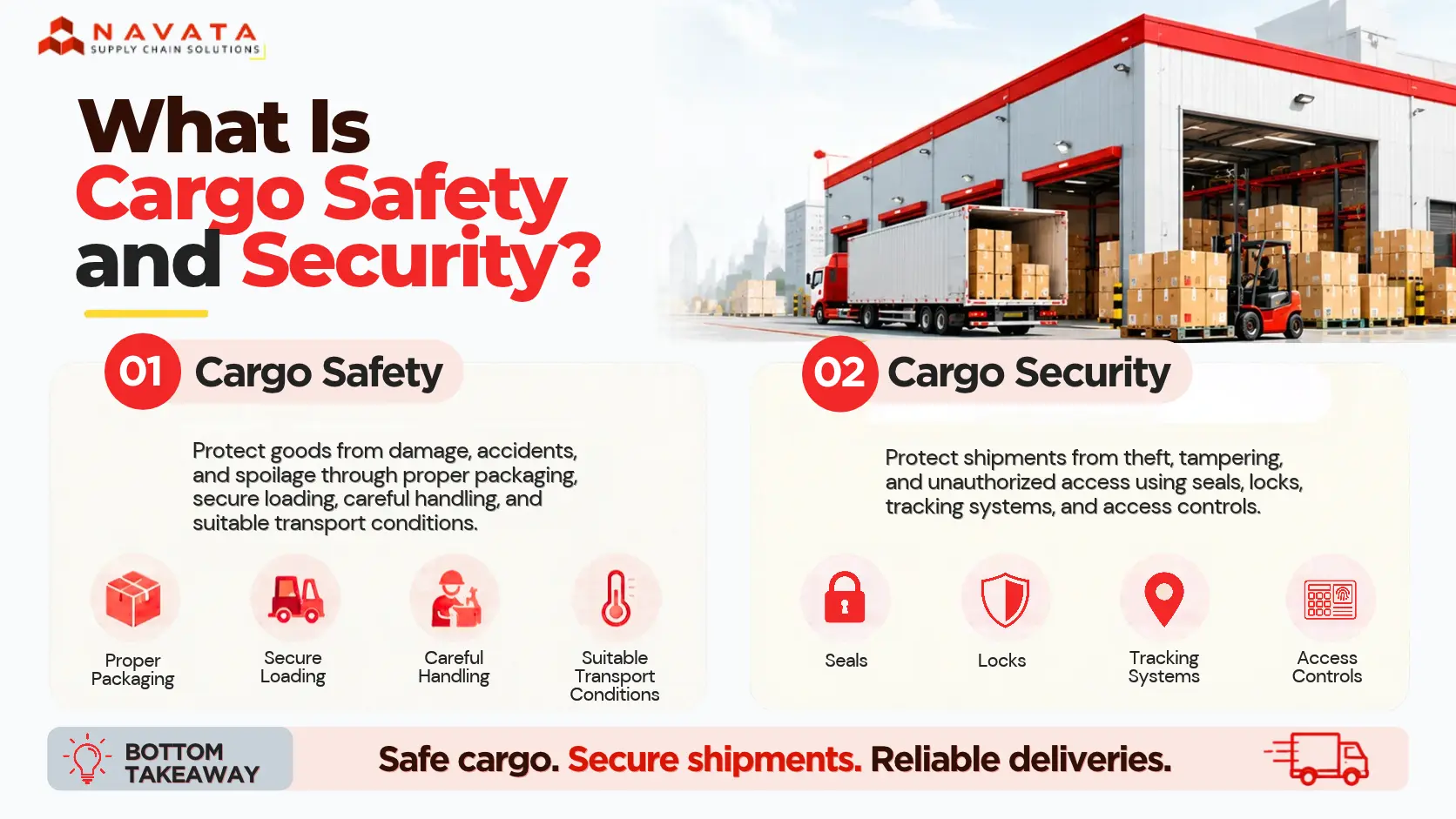
Cargo safety and cargo security are two related parts of moving goods, but they protect against different risks. Cargo safety means ensuring that goods are not damaged or degraded during transit. Safety measures prevent breakage, spoilage of perishable items, and contamination. Proper packaging, careful handling, and suitable transport conditions, such as temperature control, all contribute to cargo safety.
Cargo security means protecting goods from theft, tampering and other deliberate interference. Security measures include locks, seals, tracking devices, controlled access and vetted personnel.
In short, cargo safety keeps goods intact and in good condition, while cargo security keeps them in authorised hands. A shipment needs both to arrive complete and on time.
Cargo Safety vs Cargo Security
| Aspect | Cargo Safety | Cargo Security |
|---|---|---|
| Protects Against | Damage, spoilage, contamination, and load shift | Theft, tampering, and unauthorised access |
| Main Controls | Packaging, load securing, weight distribution, and temperature control | Seals, locks, tracking, access control, and vetted staff |
| Typical Failure | Broken or spoiled goods at delivery | Missing, swapped, or tampered goods |
| Who Is Involved | Packers, loaders, drivers, and receivers | Shippers, carriers, drivers, and receivers |
Best Practices for Cargo Safety
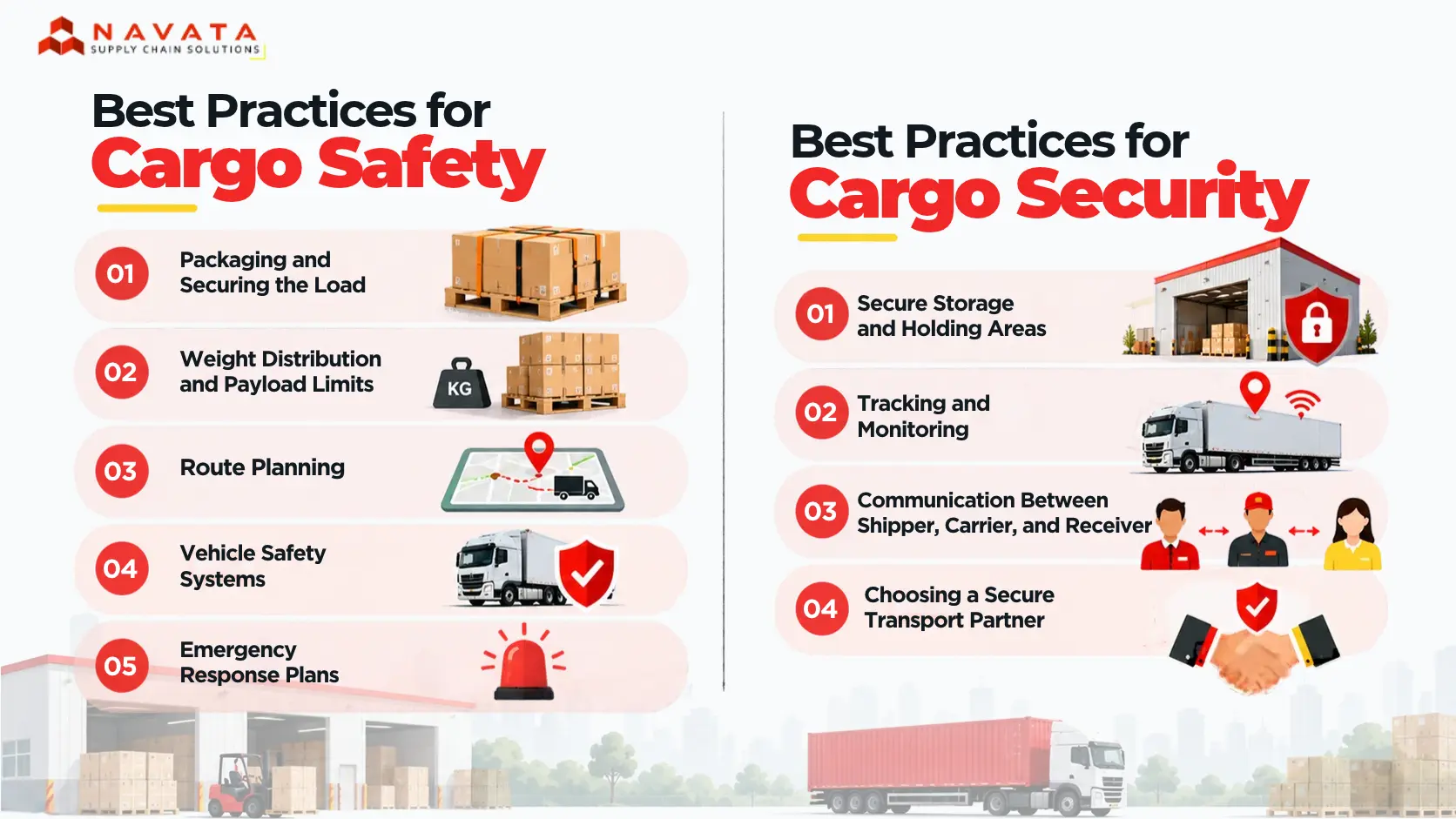
Packaging and Securing the Load
Pack goods so they can withstand vibration, braking and handling. Wrap fragile items, fill empty space with cushioning, and use cartons, crates or pallets suited to the weight they carry. Inside the vehicle, use blocking, bracing, straps and nets so that nothing can slide, tip or shift when the vehicle turns or stops suddenly.
Weight Distribution and Payload Limits
Spread weight evenly across the cargo area, with heavier items low and towards the centre. A vehicle that is loaded heavily on one side or at one end is harder to control, particularly on curves and during sudden manoeuvres. Never load beyond the vehicle’s rated payload: overloading lengthens stopping distances, strains brakes and tyres, and increases the chance of goods shifting or falling.
Route Planning
Route planning reduces both accident and delay risk. Plan routes that avoid known high-risk stretches, check traffic and road conditions before departure, and schedule rest stops at locations that are lit and staffed. GPS and route optimisation tools help planners compare options and adjust when conditions change.
Vehicle Safety Systems
Driver-assistance features such as blind-spot monitoring, reversing cameras and collision warning systems help drivers avoid incidents that damage both vehicles and cargo. Where a fleet uses them, check that they are working as part of every pre-trip inspection.
Emergency Response Plans
Incidents can happen even on well-planned trips. A clear emergency response plan sets out who the driver calls, how damaged or exposed goods are protected, and how the incident is recorded. Make sure everyone involved knows the plan, and rehearse it regularly.
Best Practices for Cargo Security
Secure Storage and Holding Areas
Goods are also exposed while they wait: in a warehouse, at a hub or in a parked vehicle. Store consignments in locked, monitored areas, limit access to named staff, and keep high-value goods in a separate secured zone. Lockable containers and alarms deter opportunistic theft and tampering.
Tracking and Monitoring
A reliable tracking setup lets you see where a shipment is throughout its journey. GPS devices, telematics and real-time monitoring show route deviations, unscheduled stops and mechanical problems as they happen, so operations teams can respond quickly. Regular check-ins with the carrier support the data with direct confirmation.
Communication Between Shipper, Carrier and Receiver
Shippers, carriers and receivers should share shipment details, expected timings and contact points before dispatch. When something changes, such as a delay, a diversion or a damaged package, an agreed communication path means the problem is raised and resolved quickly. Share sensitive details, such as the contents of high-value loads, only with the people who need them.
Choosing a Secure Transport Partner
Choose transport partners with clear security practices: background-checked drivers and handlers, trained staff, sealed and lockable vehicles, and tracking that you can see. Secure cargo transport depends as much on the partner’s processes as on equipment. For theft-specific risks and prevention measures, see our guide to cargo theft in logistics.
Loading and Unloading Discipline
Goods can be damaged at the dock as well as on the road. Before loading, inspect the cargo area for leaks, sharp edges and debris, and confirm that the goods, quantities and packaging match the shipping documents. Load in the planned sequence so that the heaviest items go in first and low, and so that the first drop is the easiest to reach. Use the right handling equipment for the weight, and avoid stacking that crushes lower layers.
At unloading, check seal numbers and the condition of the packaging before the goods are moved, unload in a controlled sequence, and record any visible damage or shortage on the delivery document at the point of delivery.
Seals, Documentation and Chain of Custody
Every handover is a point where responsibility for the goods changes hands, so it should be documented and verifiable.
In India, the Carriage by Road Act, 2007 sets out the core documents for goods carried by a common carrier. The consignor executes a goods forwarding note that includes a declaration of the value of the consignment and of any goods of a dangerous or hazardous nature, and is responsible for the accuracy of those particulars. The common carrier issues a goods receipt, which serves as prima facie evidence of the weight or measure and other particulars of the goods. The carrier’s liability for loss or damage is limited to the amount prescribed unless the consignor pays a higher risk rate, so declaring value correctly matters. Notice of loss or damage must be given to the carrier in writing within 180 days of booking before any legal proceeding is instituted. The full text of the Act is published on India Code.
In practice, a clean chain of custody looks like this:
- Forwarding note: The consignor prepares the goods forwarding note, including the declared value and any dangerous goods declarations.
- Load and seal: Goods are loaded and counted, and the vehicle is sealed. The seal number is recorded.
- Goods receipt: The carrier issues the goods receipt.
- Track in transit: The shipment is tracked during transit, with checks at each handover point.
- Check on delivery: The receiver checks the seals, quantity, and condition before signing.
- Notify in writing: Any loss or damage is noted at delivery and reported to the carrier in writing.
Use tamper-evident seals with unique numbers, record those numbers on the shipping documents, and check them at every handover. A broken or mismatched seal is a signal to stop and inspect before the goods move on.
Driver Role in Cargo Safety and Security
Drivers carry responsibility for the load for most of its journey, so cargo securing in road shipments depends heavily on what the driver knows and does.
Make sure the driver knows what is being carried, including its nature, value and weight, and any special handling requirements before the trip starts. High-value goods may need tighter security, such as no unscheduled stops, while perishables may need to stay within a set temperature range. Clear instructions, and a way to raise problems during the trip, help the driver avoid incidents and handle the cargo correctly.
Vehicle Role in Cargo Safety and Security
Before any trip, confirm that the vehicle is safe and suited to the load.
The vehicle type must match the cargo. Heavy or oversized goods may need flatbed trucks, while perishable goods may need refrigerated vehicles. The vehicle should have suitable tie-down points, straps and cargo nets to secure the load.
Check load capacity before loading. The vehicle’s maximum load capacity is usually given in its documentation or on a plate or sticker on the vehicle, and it should be confirmed before goods go on board. For loads that do not fill a vehicle, see the difference between LTL and PTL.
Pre-Dispatch Cargo Safety Checklist
| Check | What to Confirm |
|---|---|
| Documents | Goods forwarding note complete, value and any dangerous goods declared. |
| Packaging | Cartons, crates or pallets suited to the weight; fragile items cushioned. |
| Vehicle | Type suited to the cargo; tie-down points, straps and nets in place; safety systems working. |
| Load | Within rated payload; heavy items low and centred; blocked and braced. |
| Seals | Tamper-evident seals applied; numbers recorded on the documents. |
| Tracking | Device active and visible to the operations team. |
| Route | Planned, with rest stops at lit and staffed locations. |
| Driver Brief | Cargo details, handling needs and emergency contacts shared. |
Common Mistakes to Avoid
- Loading without checking the cargo area for leaks, debris or sharp edges.
- Leaving gaps that let goods shift instead of filling them with dunnage or bracing.
- Exceeding the vehicle’s rated payload.
- Under-declaring value or leaving out dangerous goods details on the forwarding note.
- Applying seals without recording their numbers, or not checking them at handover.
- Sharing details of high-value loads more widely than necessary.
- Signing for a delivery before checking seals, count and condition.
Conclusion
Cargo safety and security address different risks, and a shipment needs both. Cargo safety protects goods from damage through sound packaging, load securing, correct weight distribution, careful loading and unloading, route planning, working vehicle safety systems and a practised emergency plan. Cargo security protects goods from theft and tampering through secure storage, tracking, clear communication, sealed vehicles and dependable transport partners.
Documentation ties the two together. A complete forwarding note, a goods receipt, recorded seal numbers and checks at every handover create a chain of custody that shows where responsibility sat at each step. Businesses that build these practices into every dispatch reduce loss, protect shipment integrity and give everyone in the chain confidence in the delivery.
FAQs
What is cargo safety?
Cargo safety means protecting goods from damage during transit. It relies on correct packaging, careful handling, secure loading and suitable transport conditions, such as temperature control, to prevent breakage, spoilage and contamination.
What is cargo security?
Cargo security means protecting goods from theft, tampering and other deliberate interference during transport, using measures such as seals, locks, tracking devices, access control and vetted personnel.
What is the difference between cargo safety and cargo security?
Cargo safety protects goods from accidental damage, such as breakage, spoilage or load shift. Cargo security protects them from deliberate harm, such as theft or tampering. Most shipments need controls for both.
Why is proper packaging important for cargo safety?
Proper packaging protects fragile items from impact, stops goods from moving in transit and keeps them intact. Cushioning, bracing and straps help keep the load secure.
What safety systems help vehicles carrying cargo?
Driver-assistance systems such as blind-spot monitoring, reversing cameras and collision warning systems help drivers avoid incidents that could damage the vehicle and its cargo.
What is the role of tracking and monitoring in cargo security?
GPS devices, telematics and real-time monitoring let operations teams follow a shipment throughout its journey, identify route deviations or unscheduled stops, and respond quickly to potential issues.
What is DG and non-DG cargo?
DG cargo refers to dangerous goods: items with hazardous properties that require appropriate packaging, labelling and handling. Non-DG cargo is general cargo that does not fall into that category. Under the Carriage by Road Act, 2007, the consignor's goods forwarding note must declare goods of a dangerous or hazardous nature.

1 Comment